

What happens if a camera records suspicious activity but no one receives an alert, or an alarm sounds without a clear response procedure? Protecting business assets from theft Atlanta businesses face takes more than installing cameras. Start by identifying vulnerable assets, entry points, delivery areas, and daily routines, then match safeguards to the risks.
A practical plan balances security with staff workflows and defines what happens when a system detects a problem. This guide explains how cameras, alarms, access control, and 24/7 professional monitoring can work together as a coordinated security stack. You’ll also learn how procedures support prevention and response, and how a site survey and professional installation can address gaps at your Metro Atlanta business.
Key Takeaways
- Start protecting business assets from theft Atlanta businesses need to secure by mapping valuable items, entry points, deliveries, and staff movement across the property.
- Match each risk to a control: cameras provide visibility, access control restricts entry, and alarms with monitoring support alerts and response.
- Plan structured cabling where needed to support dependable video and data transmission between connected security devices.
- Use a site survey to prioritize gaps, plan professional installation, test system operation, and establish a maintenance review process.
Protecting Business Assets from Theft Starts with a Metro Atlanta Site Assessment
Inventory is only one part of your exposure. Equipment, business records, staff-only offices, and delivery areas may need different levels of protection. Before choosing cameras or alarms, assess how people and goods move through the property and which assets need restricted access. This gives Metro Atlanta businesses a practical basis for selecting security measures that fit the site.
Map a typical workday. Mark delivery entrances, storage locations, offices containing sensitive records, and areas used by employees, visitors, or vendors. Note when these spaces are occupied and who needs access. This site-based view helps connect physical security systems with your building layout and daily routines.
Which business assets and access points should you assess first?
Group assets by location and access needs, then review the routes and routines around them. Check:
- Stock and equipment: Identify storage areas, workspaces, and the points where goods are received, stored, or moved. If you need secure on-site units to safeguard tools or overflow inventory, discover Atlanta Container & Trailer for storage containers and trailers.
- Offices and records: Note rooms that should have limited access, including spaces containing sensitive business documents.
- Doors and shared areas: Review primary entrances, receiving areas, and spaces used by staff, visitors, or vendors.
- Closing routines: Review how doors are secured, how keys or credentials are managed, and how access is restricted after business hours.
A site survey is an on-site assessment to identify entry points, vulnerabilities, and optimal hardware placement. It helps evaluate sightlines and access needs, then determine where cameras or access control can support your security plan. For example, compare the view at a receiving entrance with the route from that entrance to storage. If a doorway is visible but the goods movement area is not, the layout may need a different camera position or added coverage. A site-specific assessment provides a useful starting point for choosing controls that fit your building and operations.
Build a Theft-Prevention Security Stack That Fits Your Business
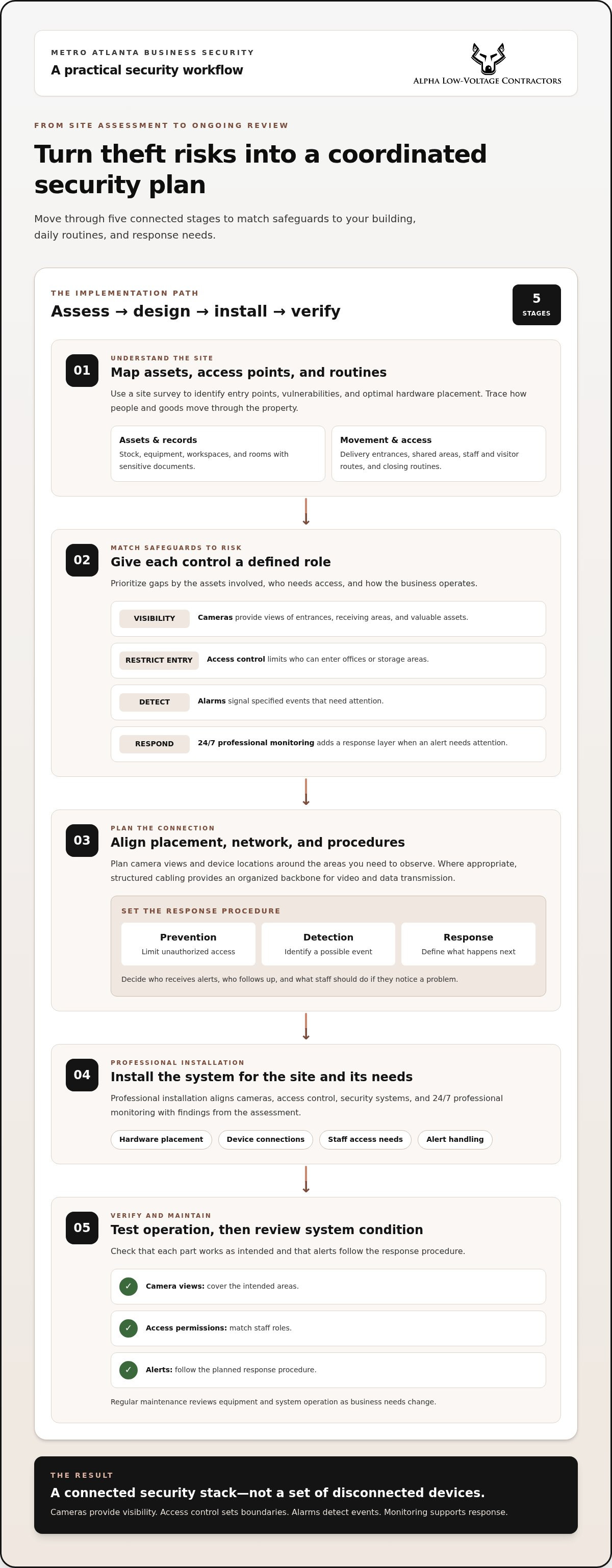
Choose each control for a defined risk. Surveillance cameras provide visibility around entrances, receiving areas, and valuable assets. Access control limits who can enter offices or storage areas. Alarms detect specified events, while 24/7 professional monitoring adds a response layer when an alert needs attention. Together, these tools form a security stack rather than a set of disconnected devices.
Prevention limits unauthorized access, detection identifies a possible security event, and response determines what happens after an alert. Decide who receives alerts, who is responsible for following up, and what staff should do if they notice a problem. Clear procedures help make the technology useful in daily operations. For broader planning context, review physical security guidance from CISA.
How do cameras, access control, and monitoring work together?
Access permissions set boundaries for staff and visitors. Camera coverage lets you review activity in selected areas, while alarms signal events that need attention. Monitoring connects alerts to a response process. For example, access control can restrict a records room, a camera can cover its entrance, and an alarm can signal activity when the business is closed. Decide in advance who can enter the room, how access changes when staff roles change, and how an alert will be handled.
Reliable integration also depends on the network. Where appropriate, structured cabling provides an organized backbone for video and data transmission between cameras and security devices. When planning coverage, consider whether the network connection reaches each device location and whether the camera view covers the area you need to observe. A site-specific design helps align hardware placement, cabling, and monitoring with your operating needs.
For more detail on entry permissions and camera placement, read the commercial access control guide and camera installation guide. AlphaLVC installs and maintains security systems, surveillance cameras, and access control for businesses in Metro Atlanta. Its business security system services can bring these components together with 24/7 professional monitoring.
Move from Theft-Risk Findings to Professional Security in Metro Atlanta
An assessment is useful when it leads to a clear implementation plan. Prioritize findings by the assets involved, who needs access, and how the business operates. A concern around a records room may call for different controls than a receiving area used throughout the day. Record the issue, its location, and the current procedure so the next steps address the actual gap.
What should happen after your business security assessment?
Move through the next steps in order:
- Document risks: Record vulnerable locations, access concerns, and existing equipment.
- Prioritize controls: Address the most relevant gaps while accounting for staff movement and business routines.
- Plan installation: Select hardware placement and connections to suit the site.
- Test operation: Check cameras, access control, alarms, and monitoring as an integrated system.
- Review maintenance: Schedule regular checks of equipment and system operation.
Professional installation helps align cameras, access control, security systems, and 24/7 professional monitoring with the needs identified at your site. During testing, check that camera views cover the intended areas, access permissions match staff roles, and alerts follow the response procedure. Ongoing maintenance provides a way to review system condition and address issues as they arise. It also helps you keep the equipment and procedures aligned as business operations change.
For more detail on planning an installation and maintaining equipment, read the professional security system installation guide and the security system maintenance guide. AlphaLVC provides professional installation and maintenance of security systems, surveillance cameras, and access control for Metro Atlanta businesses. A site-specific plan gives your business a practical path from identified gaps to coordinated security. If you’re considering protecting business assets from theft Atlanta, discuss a Metro Atlanta business security project with AlphaLVC.
Put a Site-Specific Security Plan Into Action
Protecting business assets from theft Atlanta businesses rely on starts with a clear view of the property: where valuable items are kept, how people and deliveries move, and which areas need controlled access. A site survey can help identify gaps and guide decisions about camera placement, access control, alarms, and network connections.
These measures work best as a coordinated security stack. Professional installation and maintenance help align security systems, surveillance cameras, and access control with your site’s needs. 24/7 professional monitoring adds a response layer, while local knowledge of Metro Atlanta business properties can inform planning around your building and daily operations.
Start with the risks you’ve identified, then set priorities for installation, testing, and ongoing maintenance. Discuss a security system for your Metro Atlanta business with AlphaLVC.
Frequently Asked Questions
What business assets are most at risk of theft?
Risk varies by business and property, so start by mapping inventory, equipment, records, and restricted areas. Review where deliveries enter, how employees and visitors move through the site, and which assets need limited access. This assessment is a practical first step in protecting business assets from theft Atlanta businesses may face. A site survey can help organize priorities around your building’s layout.
How can a business combine cameras and access control to help prevent theft?
Access control limits entry to authorized people, while cameras provide visibility into selected areas. Together, they support different layers of prevention. Add alarms and clear staff procedures to help address events and define next steps. The right arrangement depends on your site, access needs, and the assets you’re protecting, so plan the controls around actual business operations.
Is video surveillance enough to protect business assets from theft?
No. Cameras provide visibility and can help you review activity, but they don’t control who enters restricted areas or provide every response function. Consider how surveillance fits with access control, alarms, monitoring, and staff procedures. A site-specific assessment can help identify gaps and guide how system components should work together across your business property.
When should a Metro Atlanta business consider professional security installation?
Consider professional installation when you need to coordinate cameras, access control, alarms, or monitoring across your site, or when existing equipment leaves unclear coverage or access gaps. A site survey can guide hardware placement and system design. AlphaLVC provides professional installation and maintenance of security systems, surveillance cameras, and access control, along with 24/7 professional monitoring. Discuss your Metro Atlanta business security needs with AlphaLVC.


