

If an alarm is triggered while you’re away, who receives the signal, and what happens next? Professional alarm monitoring answers that question through an agreed process, not just a phone notification. The alarm system sends an event for handling, and the response depends on the equipment, account settings, and service procedures.
You’ll learn how the signal-to-response process works, what role monitoring plays, and how alarms can connect with cameras, access control, and other parts of your security stack. You’ll also see how monitoring differs from equipment installation and app alerts, plus what to review if you already have security equipment. For homes and businesses in Metro Atlanta, these details help you plan a system around the property and its daily routines.
Key Takeaways
- Understand how professional alarm monitoring differs from local alarms, app notifications, cameras, and remote management.
- Follow the signal path from event detection to monitoring, and learn why follow-up depends on system settings and service procedures.
- Assess how alarms, cameras, and access control can work together as part of your security stack.
- For a Metro Atlanta property, consider how professional installation and maintenance support 24/7 monitoring for residential or commercial security needs.
What professional alarm monitoring adds to a security system
Professional alarm monitoring means a connected security system’s signals are handled by monitoring personnel according to established service procedures. When a sensor detects an event, the system can send a signal for review. The service arrangement defines how the signal is handled and what notifications or follow-up may occur. The precise steps depend on the equipment, account settings, and agreed procedures.
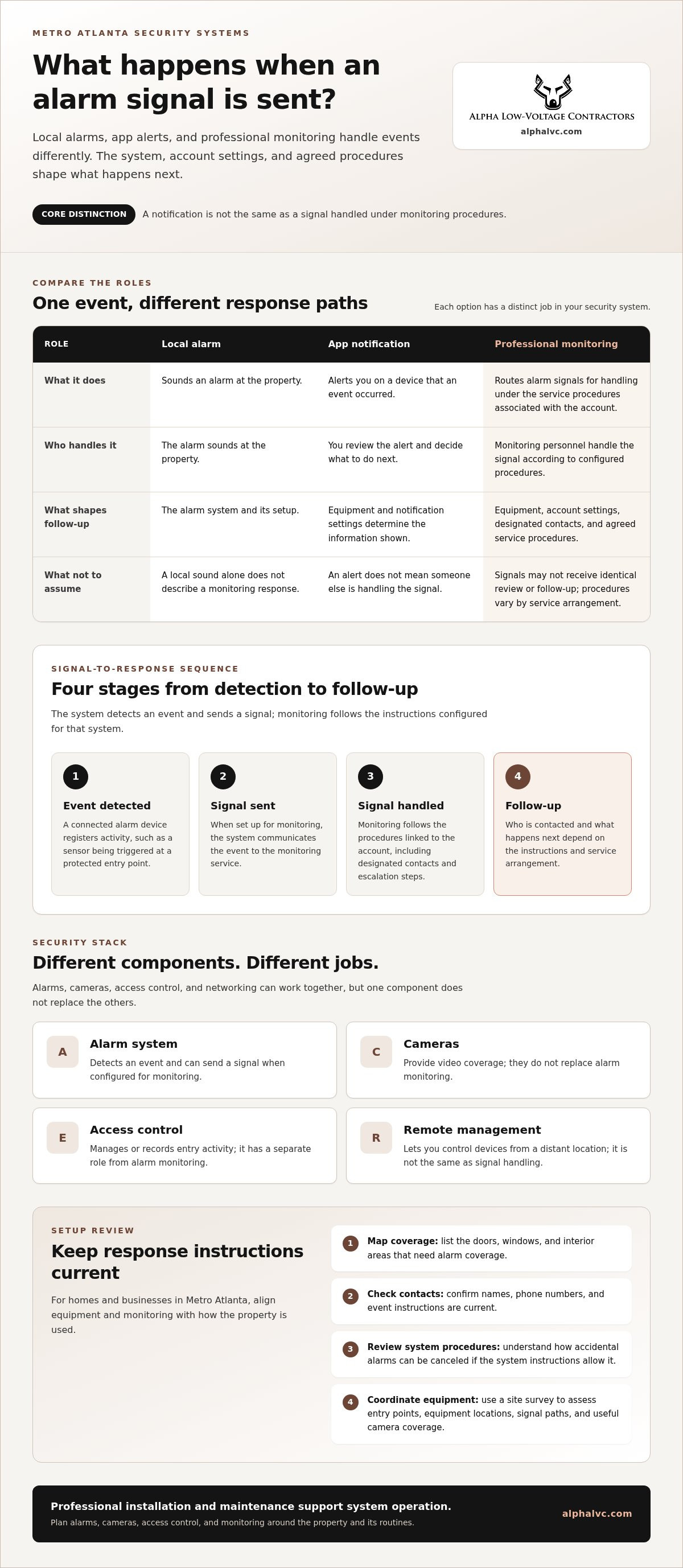
A local alarm sounds at the property. An app notification alerts you on a device, but with self-managed alerts, you review the information and decide what to do next. Professional alarm monitoring adds a human-supported process for handling alarm signals. An alarm monitoring center is a facility that receives and handles signals from security systems.
How monitoring differs from self-managed alarm alerts
An app may show that an alarm event occurred, with details determined by your equipment and settings. The notification itself does not mean someone else is handling the signal. Monitoring follows configured procedures, which may include contacting designated people or taking other follow-up steps. Review which contacts and instructions are attached to your service, and keep them current.
Cameras provide video coverage, while access control manages or records entry activity. Neither replaces alarm monitoring. Remote management lets you control devices from a distant location, but it serves a different purpose. Together, alarms, cameras, access control, and networking form your security stack, with each component performing a distinct function. In Metro Atlanta, professional installation and maintenance help keep equipment and monitoring connected as intended.
How professional alarm monitoring handles an alarm signal
The basic sequence is straightforward: a security system detects an event, sends an alarm signal, and monitoring follows the procedures configured for that system. The equipment and account instructions determine who is notified and what follow-up may occur.
What happens after an alarm signal reaches monitoring
- 1. The system detects an event. A connected alarm device registers activity, such as a sensor being triggered at a protected entry point.
- 2. The system sends a signal. When the system is set up for monitoring, it communicates the event to the monitoring service.
- 3. The signal is reviewed and handled. Monitoring follows the procedures associated with the account, which may identify designated contacts and escalation steps.
- 4. Notifications or follow-up occur. Who is contacted and what happens next depend on the instructions and service arrangement.
Before monitoring begins, review the contact list and instructions for alarm events. Confirm that names and phone numbers are current, and that the designated contacts know what to expect. For a business, update the list when staff responsibilities change. At home, revisit it when household arrangements change.
False alarms can happen, so learn how your system is configured and how to cancel an accidental alarm if the system’s instructions allow it. Monitoring procedures vary, so do not assume every signal receives identical review or follow-up. The Monitoring Association (TMA) provides industry resources for understanding professional monitoring practices.
AlphaLVC provides professional installation, maintenance, and 24/7 professional monitoring for Metro Atlanta properties. Learn about professional alarm monitoring from AlphaLVC as part of a system planned around your property and its response procedures.
Choosing professional alarm monitoring for a Metro Atlanta property
Start by mapping how the property is used and which areas need alarm coverage. At home, you may prioritize selected doors, windows, and interior areas. A business may need coverage coordinated with staff routines, surveillance cameras, or access control. Consider who needs to receive event notifications, how entry points are used, and whether existing equipment can support the planned system.
False alarms are another practical consideration. The Office of Justice Programs discusses their causes and effects in its overview of the high rate of false alarms. Clear system setup and accurate account instructions help ensure events are handled according to the procedures established for your property.
How installation and system integration support monitoring
A site survey helps identify entry points, vulnerabilities, and suitable equipment locations before installation. During planning, review which sensors cover each area, how signals reach monitoring, and where cameras can provide useful video coverage. Access control manages entry, while structured cabling can support network connections for devices that require them. Each component has a distinct role, so the design should match the property’s layout and operating needs.
AlphaLVC installs and maintains security systems, surveillance cameras, and access control, and provides 24/7 professional monitoring for residential and commercial properties in Metro Atlanta. Planning equipment and monitoring together helps align the system with the property’s needs. Maintenance supports the continued operation of installed hardware.
If you’re planning a new system or reviewing existing equipment, explore AlphaLVC’s professional alarm monitoring and security solutions.
Plan a security system that fits your property
Professional alarm monitoring works best as part of a planned security stack. An alarm detects an event and sends a signal; monitoring follows the system’s configured procedures. Cameras can provide video coverage, and access control manages entry. Each device has a separate job.
To assess your setup, list the areas that need monitored alarm coverage, identify who should receive notifications, and note how existing equipment connects. Review the system’s instructions for accidental alarms, too. Professional installation and ongoing maintenance help keep the equipment aligned with those needs.
AlphaLVC provides 24/7 professional monitoring, installation, and maintenance for residential and commercial customers in Metro Atlanta. Contact AlphaLVC to plan professional alarm monitoring for your property.
Frequently Asked Questions
What is professional alarm monitoring?
Professional alarm monitoring is the handling of signals from a connected security system according to established service procedures. When an alarm event occurs, the signal is handled based on the system’s setup and account instructions. This differs from a local alarm that sounds at the property or an app notification that alerts you. AlphaLVC provides 24/7 professional monitoring for residential and commercial customers in Metro Atlanta.
How does professional alarm monitoring work?
The general process is that the system detects an event, sends a signal, and monitoring follows the procedures configured for the account. Those procedures determine what notifications or follow-up may occur. For example, a sensor may detect an event at an entry point, but the next steps depend on the equipment, account settings, and agreed instructions.
Is professional alarm monitoring worth it?
It may suit you if you want alarm signals handled through established monitoring procedures rather than relying only on yourself to see and act on an app alert. Consider which areas need coverage, the property’s routines, and how event notifications should be managed. AlphaLVC offers professional installation, maintenance, and 24/7 professional monitoring in Metro Atlanta.
Can professional alarm monitoring work with cameras and access control?
Yes. Alarms, cameras, and access control can be planned as connected parts of your security stack, with each serving a distinct role. An alarm detects configured events, cameras provide video coverage, and access control manages entry. Integration depends on system design and setup. A site survey helps plan equipment placement for a home or business.


