

A camera can protect your business and still create privacy risks if it captures sensitive spaces or records sound without a clear plan. If you’re reviewing Atlanta business security camera laws, build privacy safeguards into your system design from the start.
Before choosing camera locations, audio settings, or footage access rules, consider what each camera will capture and how recordings will be used. Georgia rules distinguish between video surveillance in areas open to view and recording where people expect privacy; audio can raise separate consent concerns. This guide covers camera placement, employee and customer privacy, and practical footage-handling policies for Metro Atlanta businesses. A site survey and AlphaLVC’s surveillance camera installation can help plan camera views and structured cabling around your property’s security needs. For legal questions about your specific situation, consult qualified Georgia counsel.
Key Takeaways
- Atlanta business security camera laws involve more than camera placement. Consider privacy expectations, recording type, and how footage will be used.
- Start with a clear security purpose and a site survey. Map camera views to your property’s layout and security needs.
- Set practical safeguards for notices, access permissions, footage handling, and retention, then review legal questions with qualified Georgia counsel.
- Professional installation can coordinate camera views, structured cabling, networking, and access needs, but it does not replace legal advice or guarantee compliance.
Atlanta Business Security Camera Laws: What Georgia Privacy Rules Mean
Camera legality depends on where a camera points, the privacy people reasonably expect in that space, whether the system records video or audio, and how recordings are used. For a Metro Atlanta business, one camera may cover an ordinary sales floor as well as a privacy-sensitive area through a doorway or reflection. Review each camera’s actual field of view rather than treating the whole property alike.
Georgia’s privacy and eavesdropping rules should be reviewed with qualified Georgia counsel before you rely on them to plan a camera system. Ask counsel to confirm how O.C.G.A. § 16-11-62 and § 16-11-66 apply to your locations and recording setup. The legal analysis may depend on the circumstances, including the space recorded, the recording method, and the people captured. This overview is not legal advice or a complete statement of current law.
Video surveillance, audio recording, and private spaces
Georgia law addresses video surveillance and audio recording under distinct provisions: O.C.G.A. § 16-11-62 concerns surveillance, while § 16-11-66 addresses recording a conversation by a participant or with a party’s consent. Ordinary business areas, such as a lobby or sales floor, differ from restrooms, changing rooms, and other spaces where people may reasonably expect privacy. Review camera placement and microphone settings separately with counsel.
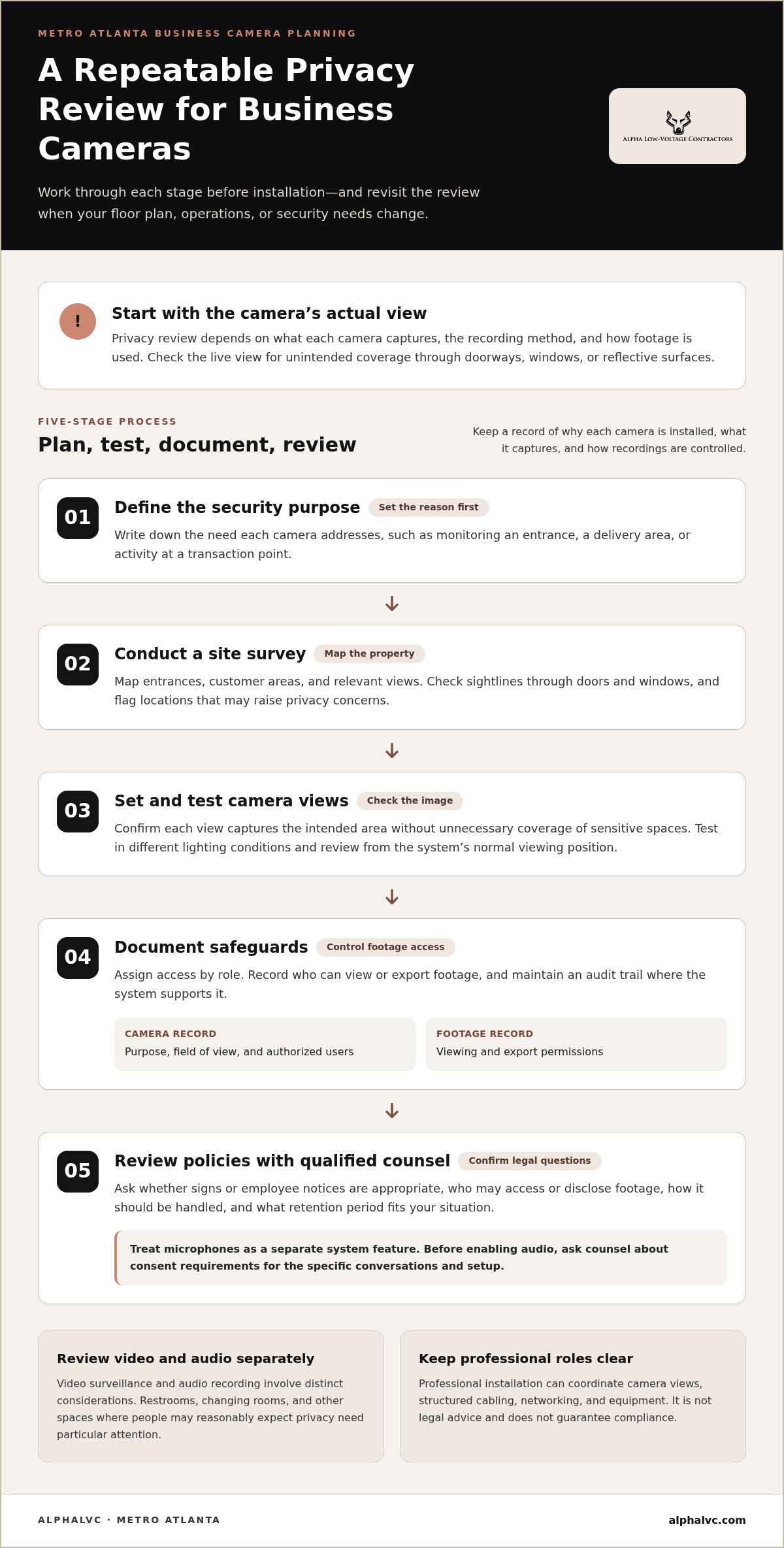
For each camera, write down its security purpose, then check the live view for unintended coverage through doorways, windows, or reflective surfaces. Pay particular attention to views that extend beyond the intended area or into shared spaces. Treat microphones as a separate system feature. Before enabling audio, ask counsel about consent requirements for the specific conversations and setup. A site survey can help map intended views and identify placement concerns. AlphaLVC provides professional surveillance camera installation for system layout and equipment, not legal interpretation.
A Practical Camera Compliance Checklist for Metro Atlanta Businesses
Turn your privacy review into a repeatable process. For Atlanta business security camera laws, document why each camera is installed, what it captures, and how recordings are controlled. Use this sequence before installation and revisit it when your floor plan, operations, or security needs change.
- Define the purpose. Record the security need each camera addresses, such as monitoring an entrance, a delivery area, or activity at a transaction point.
- Conduct a site survey. Map entrances, customer areas, and other relevant views. Check sightlines through doors and windows, and flag locations that may raise privacy concerns.
- Set and test camera views. Confirm each view captures the intended area without unnecessary coverage of sensitive spaces. Check the image in different lighting conditions and review it from the system’s normal viewing position.
- Document safeguards. Assign access by role, record who can view or export footage, and maintain an audit trail where the system supports it.
- Review policies with counsel. Ask whether signs or employee notices are appropriate, who may access or disclose footage, how it should be handled, and what retention period fits your situation.
Document camera purpose, coverage, and footage access
Maintain a camera map that records each device’s purpose, field of view, and authorized users. For notice, access, disclosure, and retention practices, get advice from qualified counsel rather than assuming one policy fits every workplace. The University System of Georgia’s Georgia Cyber Law and Legislation page offers legal context for data handling; counsel can assess how it applies to your recordings. For camera planning details, see the Metro Atlanta surveillance camera installation guide.
Visit the security system services overview to see how camera installation can fit your site’s security needs.
Plan a Business Camera System with Professional Installation
A dependable camera system requires more than choosing camera locations. Professional installation coordinates each camera’s field of view with structured cabling, network capacity, and the way staff use entry points. Planning these elements together helps align the system with daily operations and defined security goals.
Use a site survey to connect camera coverage and operating needs
A site survey maps entry points, coverage priorities, equipment locations, and practical cabling paths. It can also identify where lighting, building layout, or network access may affect camera placement. For Metro Atlanta businesses, resolving these details before installation helps match the equipment and layout to the site’s operating needs.
Consider how cameras fit into the rest of your security stack. Access control can help manage authorized entry, while 24/7 Professional Monitoring adds a separate layer of response. Review the commercial access control guide for ways access systems fit into business security planning. For cabling considerations, the security camera cabling guide explains how infrastructure supports video transmission.
Professional installation supports system performance, but it isn’t legal advice and can’t guarantee compliance. Before enabling audio or finalizing privacy-sensitive camera views, discuss your setup with qualified Georgia counsel. The Reporters Committee for Freedom of the Press provides background on Georgia Recording Laws that can inform those questions. Your review of Atlanta business security camera laws should account for both the physical layout and how the system operates.
For a professionally planned system that connects camera coverage, cabling, and access needs, discuss a Metro Atlanta camera system with AlphaLVC.
Turn Your Camera Plan into a Reliable System
Make your camera plan part of routine business planning. When operations or the layout change, review whether camera coverage still matches how the site is used and whether written procedures reflect current practices. Keep a record of changes to camera views and system access so future reviews have a clear starting point. A careful approach to Atlanta business security camera laws can help you make informed updates as your business evolves.
Ready to put your plan into practice? Explore business security system options with AlphaLVC and take the next step toward a camera setup that fits your operation.
Frequently Asked Questions
Do Georgia businesses have to post signs when security cameras are recording?
Notice requirements depend on the circumstances, what the system records, and other rules that apply to your business. Video-only cameras and devices with microphones can raise different questions. Before deployment, ask Georgia counsel to review each location, your employee policies, and any audio features, including whether cameras might capture conversations incidentally.
How long can a business keep security camera footage in Georgia?
Don’t assume one retention period applies to every Georgia business. Set a documented schedule based on your operational needs, contracts, and any industry-specific rules, then have counsel review it. A complaint, claim, or investigation may trigger a legal hold that affects routine deletion. Preserve relevant footage as counsel directs rather than overwriting it automatically.
Can a business share security camera footage with customers or employees?
Review each request before releasing footage; neither automatic disclosure nor automatic refusal fits every situation. Sharing may raise privacy, investigation, employment, or evidentiary concerns depending on who appears and why the recording is requested. Document the request, restrict access during review, and consult counsel. Preserve relevant footage in its original form without editing it.
Do security camera rules differ across Metro Atlanta jurisdictions?
They can, so check the rules that apply to each site rather than assuming one policy covers every location. Georgia and federal rules may apply alongside local requirements, property agreements, or industry rules. For Atlanta business security camera laws, ask counsel to review each site’s jurisdiction and relevant local safety codes before setting a standard policy.


