

What if your security system is creating a false sense of safety because of a blind spot or a weak Wi-Fi signal? Many owners feel anxiety when their cameras fail during critical moments or when messy, exposed wires compromise the property. You deserve a system that provides peace of mind without technical headaches. We understand that a surveillance setup is only as strong as its weakest connection. This guide teaches you how to secure your property through professional outdoor security camera installation, expert placement, and the right hardware choices for 2026.
You'll learn how to eliminate blind spots and ensure long-term reliability with structured cabling. We explore the benefits of AI-powered analytics, the necessity of IP66 weatherproof ratings, and how to integrate your cameras with professional monitoring. This roadmap ensures a clean, professional surveillance ecosystem that works 24/7.
Key Takeaways
- Master the "Three-Layer" perimeter strategy to ensure comprehensive coverage of entry points, driveways, and yard corners.
- Understand why hardwired Power over Ethernet (PoE) connections remain the gold standard for signal reliability and data security.
- Learn how to calculate the optimal mounting height for your outdoor security camera installation to balance clear detail with vandalism protection.
- Discover the importance of professional network optimization to ensure your surveillance system supports 24/7 monitoring without interruptions.
Maximizing Property Coverage with Strategic Outdoor Camera Placement
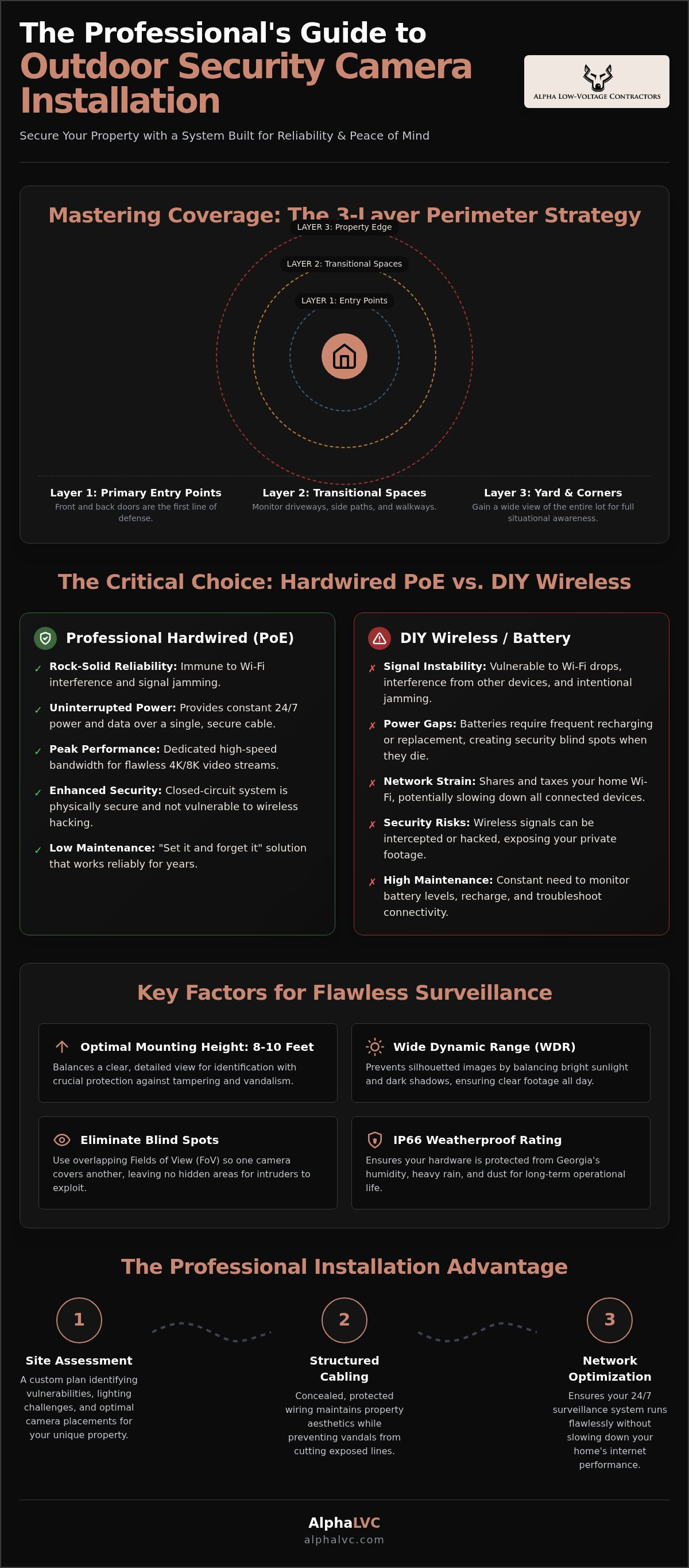
Effective security starts at the edge of your property. We use a three-layer perimeter strategy to ensure no area is left unmonitored. A professional Closed-circuit television (CCTV) system relies on these distinct zones, making them a priority during outdoor security camera installation:
- Layer 1: Primary entry points like front and back doors.
- Layer 2: Transitional spaces such as driveways and side paths.
- Layer 3: Yard corners that provide a wide view of the lot.
Mounting height is a critical variable. While 8 to 10 feet is standard, placing cameras too high loses facial detail and creates steep angles. Placing them too low makes them vulnerable to tampering. We balance these needs by choosing specific lens focal lengths for each location. Lighting also plays a major role, especially with the intense Georgia sun. Cameras equipped with Wide Dynamic Range (WDR) are necessary to balance dark shadows and bright highlights. This technology prevents silhouettes and ensures clear footage during the brightest parts of the day.
Identifying and Eliminating Common Surveillance Blind Spots
Architectural features like alcoves or overhanging eaves often hide blind spots that intruders can exploit. When planning your installation around these structures, it's also a great time to evaluate the health of your roofline; for instance, you can learn more about Higher Levels Roofing to see the level of care required for professional exterior maintenance. We eliminate these dead zones by implementing overlapping Fields of View (FoV). This design ensures the view of one camera covers the mounting base of another. It's a strategic way to ensure a reliable outdoor security camera installation. Secondary cameras act as failsafes, protecting the primary surveillance hub from being approached undetected. This layering ensures your property remains visible from every angle, regardless of the building's layout.
Choosing Between Wired and Wireless Surveillance Systems
Choosing the right transmission method is the most important decision in a professional outdoor security camera installation. While wireless options are popular for DIY projects, professional setups favor Power over Ethernet (PoE). This technology is the gold standard for high-end surveillance. PoE provides a dedicated hardwired data path that carries both power and high-speed data over a single cable. This setup eliminates the latency and signal interference common with Wi-Fi. It also prevents the risk of signal jamming, which is a growing concern for modern property owners.
Battery-powered cameras often come with hidden costs and reliability issues. In high-traffic areas, batteries drain quickly, requiring frequent recharging or replacement. This creates surveillance gaps when you need coverage most. Hardwired systems provide the steady power needed for 24/7 recording and advanced AI analytics. If you want a system that stays online without constant maintenance, consulting with a professional installer is the best path forward to ensure a reliable outdoor security camera installation.
The Long-Term Benefits of Hardwired Network Cabling
Structured cabling handles the heavy bandwidth required for 4K and 8K video streams without taxing your home Wi-Fi. This means your security footage won't slow down your other internet-connected devices. We also focus on protecting these physical connections from the elements. In Georgia's humid climate, exposed ports can corrode or short out easily. Professional installation uses weather-rated enclosures and specialized sealing techniques to prevent moisture damage. This infrastructure does more than just power your current cameras. It future-proofs your property for integrated security system upgrades, such as access control or professional monitoring hubs.
Professional Outdoor Security Camera Installation in Metro Atlanta
AlphaLVC approaches every project with a methodical process: site assessment, precise hardware placement, and final network optimization. We understand the specific security landscapes of Metro Atlanta, from suburban residential neighborhoods to high-density commercial corridors. Local expertise allows us to account for regional factors like heavy tree cover or specific lighting challenges unique to our area. A professional outdoor security camera installation ensures your system isn't just mounted but fully integrated into your property's infrastructure.
Professional mounting provides a level of structural integrity that DIY kits often lack. We use industrial-grade hardware and specialized tools to secure cameras against wind, vibrations, and tampering. This attention to detail prevents the shaky footage common with loose consumer mounts. For industrial projects requiring custom mounting supports, you can explore Direct Sales of Structural Steel Products from ALFA STEEL to find the robust materials needed for professional infrastructure. Our team also ensures all cabling is hidden and protected to maintain a clean aesthetic and prevent tampering.
Integration with 24/7 Professional Monitoring
A surveillance system is most effective when it's connected to a 24/7 professional monitoring center. While mobile alerts are helpful, they rely on you being available to check your phone. Professional monitoring ensures that trained operators can verify threats and initiate emergency dispatch immediately. This integrated approach connects your surveillance cameras with access control and alarm systems for a unified defense. We also perform continuous system health checks to ensure your hardware remains online and functional. This proactive maintenance gives you peace of mind that your outdoor security camera installation will perform exactly when it's needed most.
Securing Your Property with Expert Surveillance
A reliable surveillance system requires more than just high-end hardware. It depends on strategic placement to eliminate blind spots and a hardwired foundation to prevent signal loss. You've learned how the "Three-Layer" strategy and Power over Ethernet cabling provide a level of security that DIY wireless kits often lack. Investing in a professional outdoor security camera installation is a disciplined approach to protecting your assets. Our team brings local Metro Atlanta expertise and commercial-grade hardwired solutions to every project.
We're ready to help you transition from basic cameras to a fully integrated system. This includes 24/7 professional monitoring and continuous health checks to ensure your property stays protected. Schedule your professional outdoor camera assessment with AlphaLVC today to begin creating a more secure environment for your home or business. We look forward to helping you achieve lasting peace of mind.
Frequently Asked Questions
Do I need a permit for outdoor security camera installation in Atlanta?
Most residential outdoor security camera installation projects in Metro Atlanta don't require a building permit. These systems use low-voltage wiring that doesn't usually alter the building's structure. Commercial properties or installations requiring new high-voltage electrical outlets should check local zoning codes. We recommend verifying with the City of Atlanta Office of Buildings if you're unsure about specific site requirements.
What is the best height to mount outdoor security cameras?
The optimal mounting height is typically between 8 and 10 feet. This range is high enough to prevent easy tampering but low enough to capture clear facial features. If you mount cameras higher, you'll likely need a specialized telephoto lens to maintain image quality. Professional installers calculate this distance based on the specific Field of View required for your entry points.
Can outdoor cameras work in complete darkness?
Yes, modern cameras use Infrared (IR) LEDs to illuminate areas in total darkness. These lights are invisible to the human eye but allow the camera to record clear black-and-white footage. Some high-end models feature full-color night vision using large sensors and built-in light. This ensures your outdoor security camera installation provides reliable evidence regardless of the ambient light levels.
What happens to my cameras if the power or internet goes out?
If the power goes out, your cameras will shut down unless the system is connected to an Uninterruptible Power Supply (UPS). If only the internet fails, hardwired systems with a local Network Video Recorder (NVR) will continue to record footage locally. You'll lose remote viewing and mobile alerts, but the physical evidence stays safe on your hard drive until the connection returns.


