

What if the right camera count still leaves critical parts of your property out of view? When comparing commercial video surveillance Atlanta options, consider coverage, image quality, recording capacity, and network readiness. A system should capture footage that is useful for your security needs and fit the way your business operates.
Comparing cameras, recording options, installation, integration, and ongoing support can be difficult. This guide explains how to map your surveillance needs, check whether your network can support the system, and compare providers using practical criteria. You’ll also learn what to discuss during a site survey, including camera placement, recording requirements, access control integration, and installation details for your Metro Atlanta business.
Key Takeaways
- For commercial video surveillance Atlanta, start by listing the assets, entry points, operating hours, and incident concerns your system needs to address.
- Use a site survey to map camera coverage across entrances, transitional spaces, and other priority areas on your property.
- Compare cameras and recording options against your image, night-visibility, retention, network, and license plate data requirements.
- Request written scopes from providers and confirm installation, maintenance, system integration, and monitoring responsibilities before choosing.
How to define commercial video surveillance needs for your Metro Atlanta property
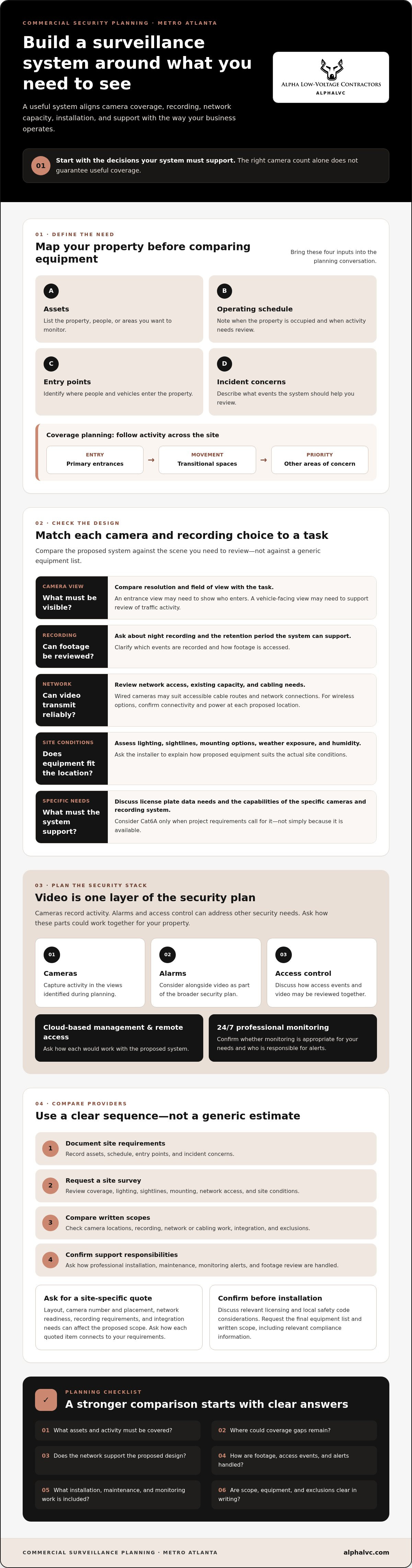
Start with the decisions your system needs to support. List the assets you want to monitor, when the property is occupied, where people and vehicles enter, and which incidents concern you. A warehouse may prioritize loading areas and stock access, while an office may focus on reception and employee entrances. These details help define commercial video surveillance Atlanta requirements before you compare equipment.
Video is one part of a security plan, not a complete plan by itself. Cameras record activity, while alarms and access control can address other security needs. As you consider how these layers could work together, this Closed-circuit television (CCTV) overview provides background on surveillance technology.
What should a commercial surveillance site survey assess?
Ask the installer to walk the property and map primary entrances, transitional spaces, and other areas that need coverage. Discuss lighting, sightlines, mounting options, network access, and what activity you need to see in recorded footage. For outdoor locations, review exposure to weather and humidity, then confirm that proposed equipment is suited to the site conditions.
Bring your asset list, operating schedule, and incident concerns to the site survey. Ask the installer to explain any coverage gaps and how each proposed camera location addresses them. For more detail on placement and installation planning, see the Metro Atlanta surveillance camera installation guide.
Which camera, recording, and network criteria matter for business surveillance?
Choose camera and connection types based on the property, not a blanket rule. Wired cameras may suit locations with accessible cable routes and network connections. Wireless options may fit some layouts, but confirm connectivity and power access at each proposed location. Ask the installer to explain how the design will transmit video reliably across your site.
Match each camera view to a task. An entrance view may need to show who enters, while a vehicle-facing view may need to support review of traffic activity. Compare resolution and field of view against those goals. Ask how night recording performs in the actual setting, what retention period the system can support, and whether the proposed cameras meet your license plate data needs. Have the provider explain the capabilities of the specific cameras and recording system before you select them.
Structured cabling can provide a network backbone for video. Discuss existing network capacity and whether new cabling is needed. Cat6A should be considered only if the project requirements call for it, not simply because it is available. For more detail, see this security camera cabling guide.
How do you assess video quality and system integration?
Ask how cloud-based management and remote access would work with the proposed system, and whether 24/7 professional monitoring is appropriate for your needs. Clarify which events are recorded, how footage is accessed, and how video may connect with access control. The Security Industry Association (SIA) offers industry resources to help inform your questions for providers.
For commercial video surveillance Atlanta properties, a professional review can help align camera placement, cabling, and system requirements. Learn more about AlphaLVC’s surveillance camera services.
How to select a commercial video surveillance installer in Metro Atlanta
Use a clear sequence to compare providers for commercial video surveillance Atlanta: document your site requirements, request a site survey, compare written scopes, and confirm what support is included. A useful scope identifies proposed camera locations, recording needs, network or cabling work, system integration, and any exclusions. Ask how professional installation and ongoing maintenance are handled, and who is responsible for monitoring system alerts or reviewing footage.
Pricing should come from a site-specific quote, not a generic estimate. The property layout, number and placement of cameras, network readiness, recording requirements, and integration needs can all affect the proposed scope. For organizations planning broader facility controls alongside security, you can explore Project-based engineering and installation fees for integrated automation systems to better understand how comprehensive turnkey projects are budgeted. Ask providers to explain how each item in the quote connects to your documented requirements.
What should you confirm before approving an installation?
Before work begins, ask the installer to confirm any licensing relevant to the project and discuss applicable local safety code considerations. Request the final equipment list and scope in writing, including any compliance information that is relevant to the proposed equipment. This makes it easier to understand what is being installed and what work is included.
Check how the cameras can work with your access control system, including what events or footage can be reviewed together. The commercial access control guide can help you prepare integration questions. Confirm any license plate data requirements and the capabilities of the proposed cameras rather than assuming every system supports the same use.
Once you’ve documented your site requirements, you can request a surveillance consultation from AlphaLVC to discuss camera installation and system needs for your Metro Atlanta property.
Plan a Surveillance System That Fits Your Site
A sound buying decision starts with your property’s actual security needs. Define the areas and activity you need to monitor, confirm camera and recording requirements, and check how the system will connect to your network and other security tools. Then compare written installation scopes and clarify maintenance and monitoring responsibilities before approving a project.
Choosing commercial video surveillance Atlanta businesses can rely on also means working with a provider that can address installation and ongoing system needs. AlphaLVC installs and maintains surveillance cameras and security systems, and offers 24/7 professional monitoring. Discuss your property’s camera placement, access control, cabling, and monitoring needs as part of planning the system.
Ready to discuss your site and next steps? Request a commercial surveillance consultation from AlphaLVC. Share your priorities and questions to start planning a system that fits your Metro Atlanta property.
Frequently Asked Questions
How do I choose a commercial video surveillance system for my business?
Choose a system based on the activity and areas you need to monitor. List your key assets, entry points, operating hours, and incident concerns, then request a site survey. For commercial video surveillance Atlanta businesses should also assess camera views, image quality, night recording, footage retention, network capacity, and whether access control or monitoring should be part of the plan.
Do commercial security cameras need professional installation?
Professional installation can help align camera placement, cabling, network connections, and recording setup with the property and system requirements. It can also identify sightline or connectivity issues before equipment is mounted. Ask prospective installers to explain their scope, relevant licensing, and maintenance options. In Metro Atlanta, confirm that the provider will consider applicable local safety codes for your project.
Can commercial video surveillance integrate with access control and monitoring?
What affects the cost of commercial video surveillance installation?
Installation cost depends on the site-specific scope. Factors can include property layout, camera quantity and placement, network readiness, cabling needs, recording requirements, system integration, and requested maintenance or monitoring. Request a written quote based on a site survey, and ask the provider to explain what equipment, installation work, and ongoing support are included. Avoid comparing estimates that cover different scopes.


