

A security camera that fails during a storm isn't a security camera; it's a paperweight. Many property owners in metro Atlanta know the frustration of DIY systems that drop signals or require constant battery swaps. You deserve a system that stays online when it matters most. This guide breaks down the critical differences in wired vs wireless security cameras to help you secure your property with total confidence.
We'll examine how power standards like PoE++ and physical connections provide the 24/7 reliability that wireless alternatives often struggle to maintain. You'll learn which setup handles the humidity and unpredictable weather of the region while delivering the clear video quality you expect from a professional installation. We'll also cover how a stable network foundation ensures your surveillance system remains a dependable asset for years to come without the headache of frequent maintenance.
Key Takeaways
- Learn why hardwired connections are necessary to prevent signal drops caused by the brick and metal siding common on properties in metro Atlanta.
- Understand the maintenance benefits of professional systems that eliminate the need for frequent battery changes and manual device resets.
- Discover how to strategically choose between wired vs wireless security cameras by identifying which areas of your property require 24/7 continuous recording.
- See how professional monitoring and high-speed network standards like PoE++ provide a more stable security foundation than standard WiFi setups.
Wired vs. Wireless Security Cameras: Understanding the Technology
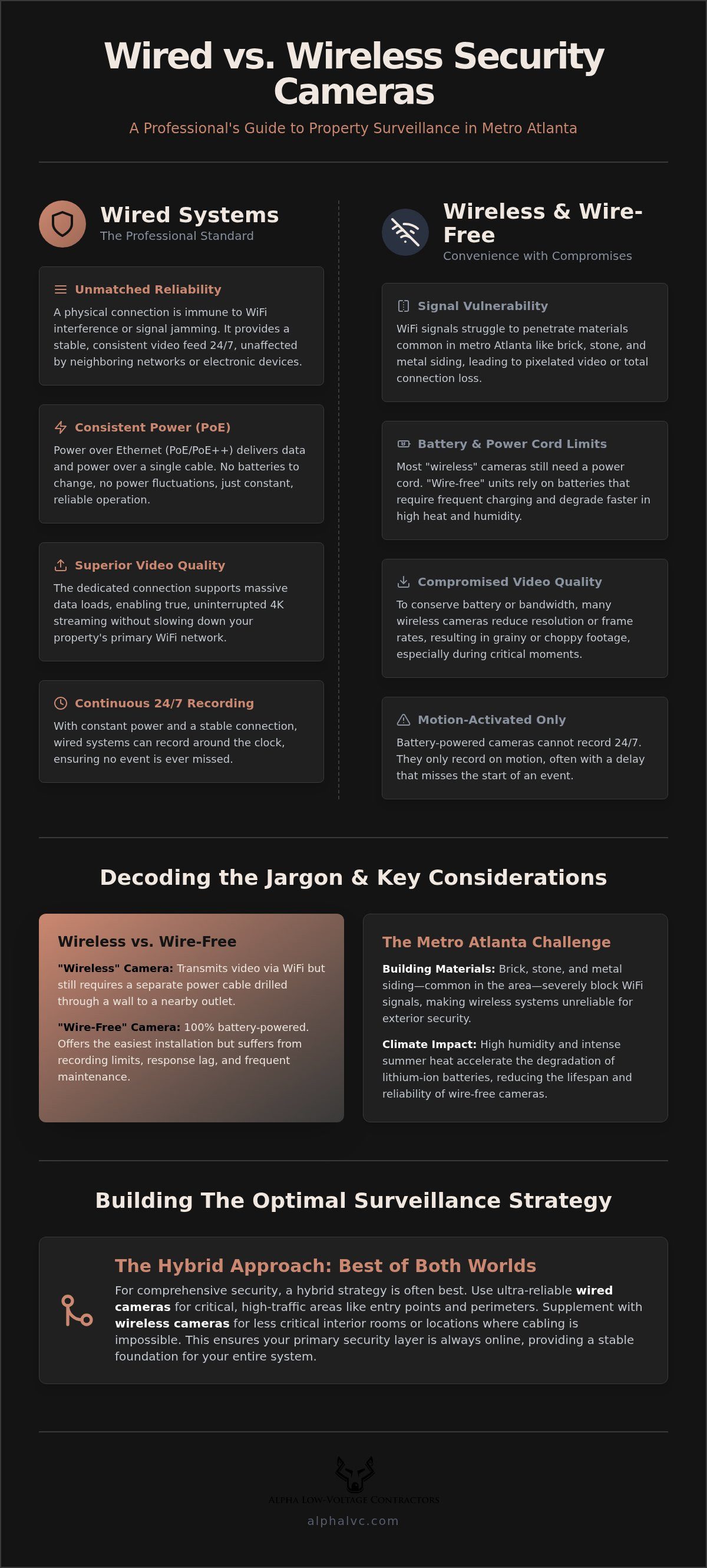
Choosing between wired vs wireless security cameras begins with understanding how they communicate. A wired system creates a permanent physical link between the camera and the recording device. This connection typically uses Power over Ethernet (PoE) technology. It sends power and high-resolution video through a single cable. Because the data isn't traveling through the air, it remains immune to signal interference or hacking from outside the property. This architecture is the standard for professional-grade security in metro Atlanta.
Wireless cameras operate differently. While they transmit video over your local WiFi network, most still require a physical power outlet nearby. This distinction is where many property owners encounter unexpected installation hurdles when they realize they still need to drill holes for power cords.
Decoding Industry Jargon: Wireless vs. Wire-Free
The industry uses "wireless" and "wire-free" as distinct categories. A wireless camera eliminates the video cable but keeps the power cord. A wire-free camera is entirely battery-powered. While wire-free options offer the fastest setup, they come with significant compromises that affect long-term reliability:
- Recording Limits: Battery-powered units usually record only when they detect motion. They cannot support 24/7 continuous recording without draining the power source in a matter of days.
- Response Lag: These cameras often enter a "sleep" mode to save energy. This can cause a delay of several seconds before recording starts, potentially missing a visitor's face.
- Resolution Caps: Constant 4K streaming requires heavy power. Many battery systems lower video quality or frame rates to extend life, which results in grainy footage.
Reliability and Performance: Comparing Power and Connectivity
Reliability is the primary differentiator when comparing wired vs wireless security cameras. Wired systems offer consistent 4K resolution because they don't rely on shared airwaves. They transmit data through dedicated copper lines, which prevents them from taxing your home WiFi network. In contrast, wireless signals often struggle to penetrate the heavy building materials found in metro Atlanta. Brick, stone, and metal siding are common here. These materials can block or weaken signals, leading to pixelated video or total connection loss during critical events.
A physical connection also protects your property from technical vulnerabilities. Wired cameras are immune to signal jamming and frequency interference from neighboring electronics. This ensures your video feed remains stable even in dense residential areas where dozens of WiFi networks compete for the same channels. Power stability is equally important. A hardwired camera never misses a moment due to a dead battery or a failed charging cycle. It provides the steady uptime required for effective 24/7 monitoring.
Power over Ethernet (PoE) vs. Battery Management
Modern professional installations use Power over Ethernet (PoE) to simplify infrastructure. This technology provides both data and power through a single cable. It utilizes the latest standards, such as PoE++ (802.3bt), to support AI-powered cameras with high power demands. While wireless systems seem convenient, the metro Atlanta climate presents a specific challenge for battery-operated units. High humidity and intense summer heat accelerate the degradation of lithium-ion batteries. This leads to shorter lifespans and frequent maintenance. If you want a system that handles these local environmental challenges, our team can design surveillance cameras tailored to your property. A wired setup avoids these power fluctuations and ensures peak performance year-round.
Choosing the Best Surveillance Strategy for Your Property
Selecting the right strategy depends on your long-term goals and property layout. Wired systems remain the primary choice for permanent residential and commercial security. They provide a foundational layer of protection that doesn't fluctuate with network congestion. If you're managing a large estate or a business in metro Atlanta, the stability of a hardwired system is unmatched. Wireless cameras have a place as secondary coverage. They work well for temporary monitoring needs or in areas where running a cable is physically impossible.
A hybrid approach often provides the most balanced results. You can install wired cameras at high-traffic entry points while using wireless units for interior rooms or remote sheds. For properties with livestock, specialized systems like BovEquine provide dedicated health and foaling surveillance that works alongside your general security setup. This ensures your primary security perimeter never goes dark. Professional installation is vital. An expert ensures your network infrastructure can handle the massive data load of multiple 4K streams without slowing down your other devices.
The effectiveness of your response team depends entirely on the stability of your hardware. Professional surveillance camera installation serves as the backbone of a 24/7 monitoring service. When comparing wired vs wireless security cameras for professional use, wired systems are the clear winner. They prevent the "device offline" errors that frequently plague DIY wireless setups during critical moments.
Reliable connections also reduce false alarms. A camera with a weak WiFi signal may drop frames or produce digital artifacts that motion sensors misinterpret. A stable, hardwired connection ensures the monitoring center receives a crystal-clear feed. This allows operators to verify threats accurately and dispatch emergency services only when a real incident occurs. Choosing a professional system means your security works as intended without the frustration of constant troubleshooting.
Secure Your Property with Professional Surveillance
Choosing between wired vs wireless security cameras comes down to one factor: reliability. While wireless options offer short-term convenience, a hardwired system provides the 24/7 uptime and 4K clarity required for true peace of mind. By prioritizing a physical connection, you avoid the signal interference and battery degradation common in the metro Atlanta climate. A professional installation ensures your network handles the data load while providing a stable foundation for 24/7 professional monitoring.
Whether you need a custom security design for a large estate or a focused system for a business, the right setup keeps your property protected without the maintenance headaches of DIY gear. We specialize in expert metro Atlanta installation to ensure your cameras remain online when you need them most. Schedule a professional security consultation for your metro Atlanta property today. You deserve a surveillance system that works every time, regardless of the weather or WiFi strength.
Frequently Asked Questions
Are wireless security cameras as reliable as wired ones?
No, wireless cameras aren't as reliable because they depend on WiFi signals that can be blocked by physical obstacles. Wired cameras offer a dedicated physical path for data. This eliminates signal drops during critical moments. In the comparison of wired vs wireless security cameras, the wired option is the standard for 24/7 professional monitoring due to its immunity to interference.
Do wireless security cameras work if the internet goes out?
Most wireless cameras stop recording or sending alerts if the internet goes down because they rely on cloud storage. Some models have local SD card slots for backup; however, you won't receive real-time notifications until the connection returns. Wired systems connected to a local Network Video Recorder continue to record 24/7 even without an active internet connection.
How long do the batteries last in wire-free cameras in metro Atlanta?
Batteries in wire-free cameras typically last between three and six months; however, local environmental factors change this. The intense heat and humidity in metro Atlanta often degrade lithium-ion batteries faster than in cooler climates. High-traffic areas that trigger frequent motion alerts will also drain the power quickly. Constant recharging becomes a significant maintenance burden for property owners over time.
Can I mix wired and wireless cameras in one security system?
Yes, you can create a hybrid system that uses both technologies. This strategy allows you to use wired vs wireless security cameras where they are most effective. You might place hardwired cameras at main entrances for maximum reliability while using wireless units for interior hallways or temporary projects. A professional integrator ensures all devices communicate properly within a single, unified interface.


