

U.S. retailers are projected to lose $49.8 billion to theft in 2026, a staggering figure that highlights the growing risks facing local business owners. If you're managing a storefront, you know that effective retail loss prevention systems Atlanta can mean the difference between a profitable quarter and a significant loss. High inventory shrink and unreliable DIY cameras often leave managers feeling vulnerable. You need clear evidence and dependable hardware to protect your investment.
We understand the frustration of slow network speeds that degrade video quality when you need it most. This guide shows you how to build a modern security stack that integrates professional surveillance with 24/7 monitoring. We'll explore how hardwired Cat6A backbones and smartphone-based access control create a reliable defense for your property. You'll learn how to secure multiple locations remotely while ensuring your system provides the high-definition footage local authorities require.
Key Takeaways
- Learn how to implement a Three-Layer perimeter strategy to secure entry points, transitional aisles, and back-office storage areas.
- Discover the ideal hardware configurations for retail loss prevention systems Atlanta, including mounting cameras at the correct height to maximize your field of view.
- Understand the technical causes of infrared ghosting and how to avoid image washout to ensure clear video evidence in dark stockrooms.
- Identify why professional site surveys and 24/7 monitoring provide a critical layer of security that standalone software cannot replicate.
Building Your Retail Security Stack in Metro Atlanta
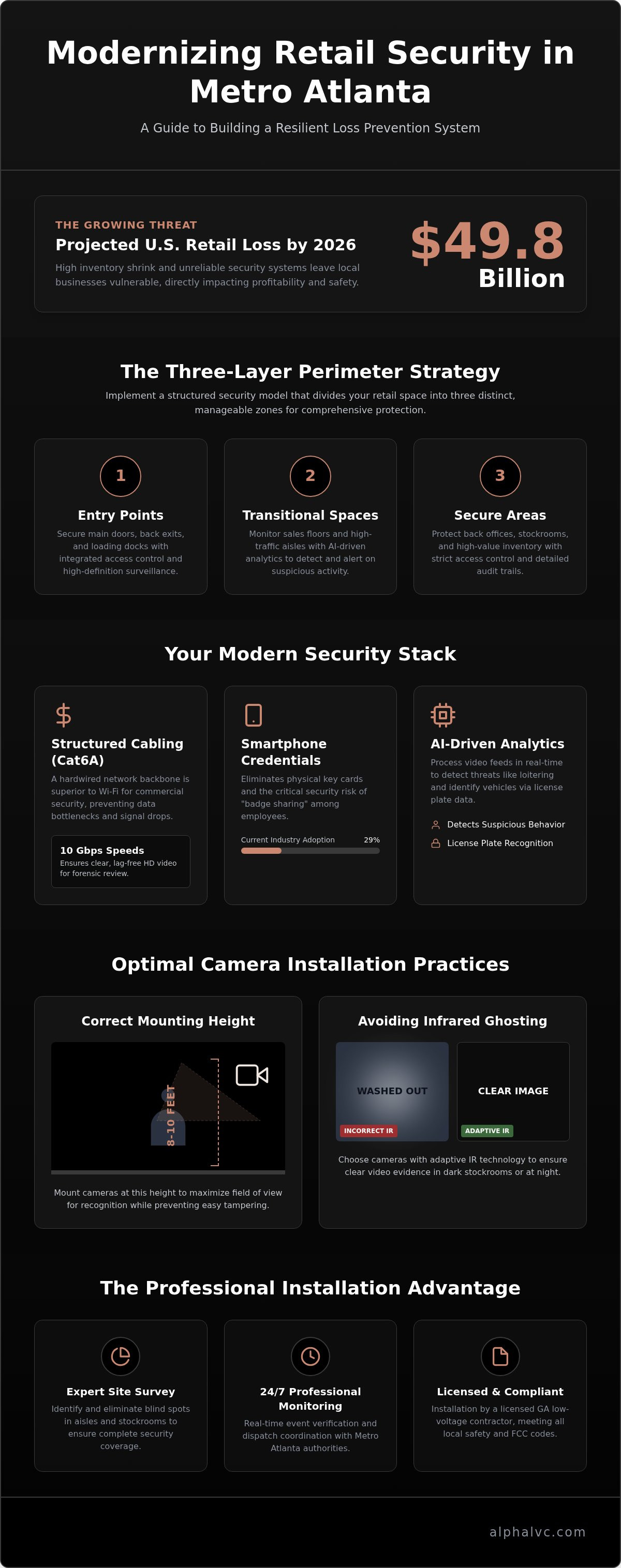
A modern approach to Retail loss prevention involves more than just hanging a few cameras. It requires an integrated security stack where surveillance cameras, alarm systems, and access control work together as a single unit. For owners seeking retail loss prevention systems Atlanta, this means moving away from isolated hardware. Instead, you should implement a Three-Layer perimeter strategy. This model secures your business through three specific zones: entry points like main doors and loading docks, transitional aisles on the sales floor, and back-office storage rooms.
Cloud-based management is essential for owners who oversee multiple Metro Atlanta locations. It allows you to monitor live feeds and manage user permissions from a single dashboard, regardless of where you are. This centralized control simplifies operations and improves response times. Additionally, shifting to smartphone-based credentials helps eliminate the common problem of badge sharing among retail employees. Digital credentials are tied to individual devices. This ensures that access logs remain accurate and your restricted inventory areas stay protected.
The Role of Structured Cabling and Cat6A
High-definition surveillance in 2026 demands a robust infrastructure. While mesh Wi-Fi is convenient for homes, it often fails in commercial environments due to signal interference. Professional retail loss prevention systems Atlanta rely on hardwired low-voltage cabling for consistent performance. Cat6A structured cabling provides the reliable backbone necessary for high-definition video transmission without data bottlenecks. This setup supports 10 Gbps speeds, ensuring your high-resolution video feeds remain clear and lag-free for forensic review.
Selecting Hardware for Loss Prevention and Asset Protection
Effective retail loss prevention systems Atlanta rely on hardware that performs under pressure. Camera placement is a critical first step. You should mount cameras between 8 and 10 feet high to achieve the best field of view. This height provides enough detail for facial recognition while remaining out of reach for easy tampering. In dark stockrooms, technical issues like infrared ghosting can occur when IR light reflects off nearby shelving. This causes image washout that ruins evidence. Choosing cameras with adaptive IR technology ensures clear footage in low-light environments.
Research from the Loss Prevention Research Council emphasizes that hardware reliability impacts overall store safety. We recommend using FCC-compliant hardware to avoid signal interference with other retail electronics like point-of-sale systems. Investing in professional retail loss prevention systems Atlanta also brings the benefit of access control audit trails. These logs allow you to investigate internal shrink by tracking exactly which employee accessed high-value storage areas and at what time. If you need help choosing the right equipment, a consultation with a security specialist can clarify your options.
AI-driven Analytics and Surveillance
Modern surveillance uses AI-driven analytics to process video feeds and detect suspicious behavior in real-time. These systems can identify loitering in high-theft aisles or unauthorized movement in back offices. In Metro Atlanta parking lots, integrating license plate data helps security teams monitor for known vehicles associated with organized retail crime. For the best results, ensure your hardware is part of a professional surveillance camera installation that optimizes every sensor for your specific layout.
Professional Installation and 24/7 Monitoring for Local Stores
Effective retail loss prevention systems Atlanta start with a professional site survey. A detailed walkthrough identifies blind spots that standard DIY kits often overlook, such as obscured shelving or shadows in high-value aisles. These hidden areas are where the majority of inventory shrink happens. A professional technician maps out your floor plan to ensure every square foot of your sales floor is covered by high-definition surveillance. This precision prevents gaps in your security coverage that thieves could otherwise exploit.
While mobile alerts are useful, 24/7 professional monitoring provides a critical layer of response that software alone cannot offer. Professional dispatchers verify alarm events in real-time and coordinate with local Metro Atlanta authorities, which is vital during after-hours incidents. In Georgia, commercial security work requires a licensed low-voltage contractor. This credential guarantees that your system is installed according to strict state regulations and local safety codes. It's the best way to ensure your hardware remains reliable when you need it most.
Long-term reliability depends on the health of your hardware. Scheduling a regular security system maintenance service prevents equipment failure before it happens. This proactive approach ensures your cameras and recording devices are always ready to capture clear evidence for local law enforcement.
Navigating Local Safety Codes and Compliance
Professional installation protects your business from more than just theft; it protects you from legal liability. In Metro Atlanta, placing cameras in prohibited areas like restrooms or changing rooms can result in heavy privacy violation fines. Experts ensure your system respects these boundaries while maximizing coverage. A wired networked system is the standard for commercial reliability. While the initial setup for each entry point involves more planning than wireless alternatives, it removes the data bottlenecks and signal drops that plague unmanaged systems. This structured approach ensures a stable connection for every access point in your store.
Secure Your Retail Future in Metro Atlanta
Protecting your inventory in 2026 requires more than just basic cameras. It demands an integrated strategy where AI-driven analytics and professional monitoring work together to reduce shrink. By choosing a licensed low-voltage contractor, you ensure your retail loss prevention systems Atlanta are fully compliant with local codes and built on a reliable, hardwired foundation. These systems don't just record theft; they provide the clear evidence and real-time response needed to stop it. Local support and 24/7 monitoring give you the peace of mind to focus on growing your business while experts manage your security stack. Ready to eliminate blind spots and protect your bottom line? Contact AlphaLVC for a professional retail security site survey in Metro Atlanta. Our team provides the technical expertise and local monitoring needed to keep your store safe, compliant, and profitable.
Frequently Asked Questions
What is a Three-Layer perimeter strategy for retail?
A Three-Layer perimeter strategy divides your store into three distinct zones: entry points, transitional aisles, and back-office storage. This framework ensures that security measures are layered to protect your most vulnerable areas. It's a key component of retail loss prevention systems Atlanta. By focusing on these specific zones, you can better manage hardware placement and reduce the likelihood of undetected theft.
Why should I choose Cat6A over standard network cables for my cameras?
Cat6A cabling offers 10 Gbps speeds, providing the necessary bandwidth for modern high-definition surveillance. Standard cables often create data bottlenecks that lead to dropped frames or low-quality video. Using Cat6A ensures a reliable, hardwired backbone that's far more stable than mesh Wi-Fi. This infrastructure is vital for capturing the clear video evidence needed by local authorities during an investigation.
How does smartphone-based access control prevent employee badge sharing?
Smartphone-based access control prevents badge sharing by linking credentials to an individual's personal mobile device. While physical fobs are easy to pass around, employees are unlikely to lend their personal phones to others. This system creates a reliable audit trail for every entry point. It's an effective way to monitor restricted areas and reduce internal shrink by ensuring only authorized staff gain access.
What are the benefits of 24/7 professional monitoring for my store?
Professional monitoring ensures that a trained dispatcher is always watching for alarm events at your Metro Atlanta storefront. Unlike basic mobile alerts that you might miss, 24/7 monitoring provides immediate verification and coordination with local law enforcement. This service adds a critical layer of response that software alone can't provide. It helps protect your inventory during after-hours incidents and minimizes the impact of break-ins.


