

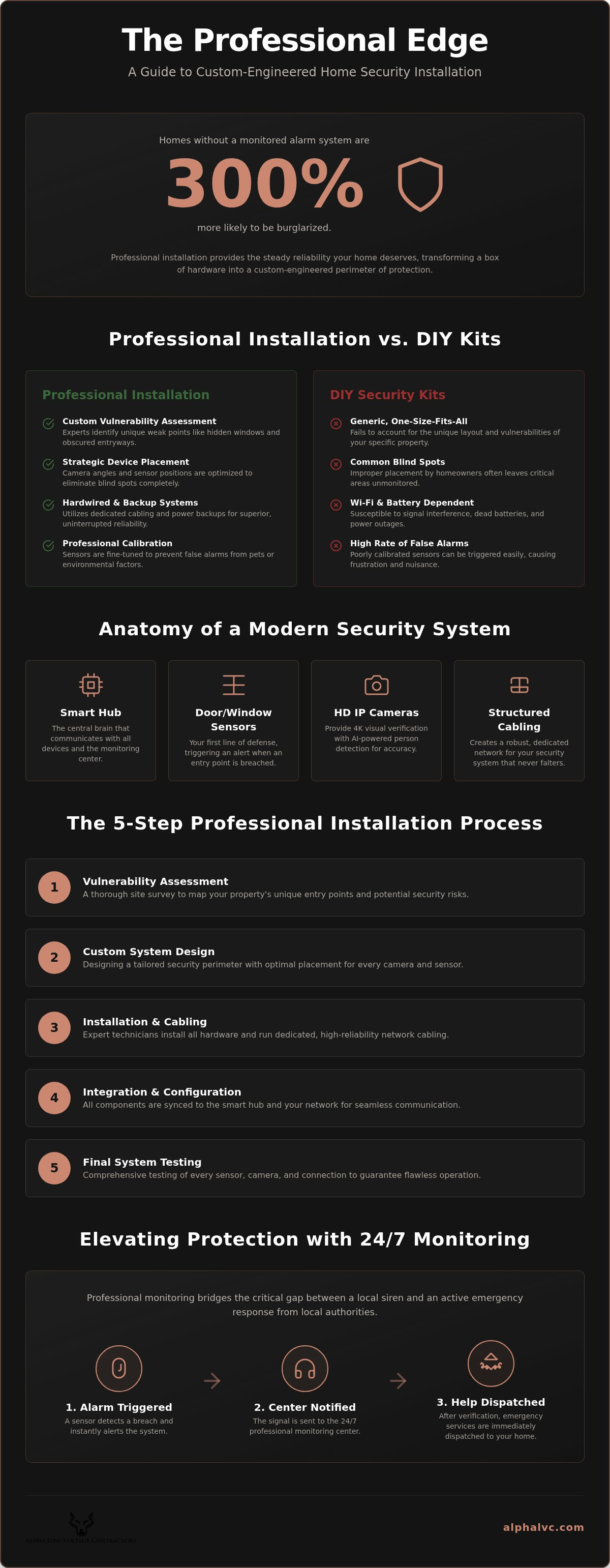
A home without a monitored alarm is 300% more likely to be burglarized than one with a visible system. This data highlights why protecting your family is a top priority, yet many homeowners hesitate because of technical anxiety. It's natural to feel overwhelmed by the choice between wired and wireless reliability or the fear that a system might fail during a real emergency. You want a setup that works every time without requiring you to become an amateur networking expert.
This guide explains how professional home security system installation transforms a box of hardware into a custom-engineered perimeter. You'll learn why expert placement of cameras and sensors eliminates the blind spots that basic DIY kits often miss. We provide a clear look at the methodical process, from the initial site assessment to final professional testing. We also cover essential local details like Atlanta alarm permit requirements. By the end, you'll understand how a 24/7 monitored system provides the steady reliability your home deserves.
Key Takeaways
- Learn how to identify vulnerable entry points and use strategic camera placement to eliminate blind spots across your property.
- Understand why a professional home security system installation ensures all components communicate seamlessly using dedicated power and backup systems.
- Explore the step-by-step process of a professional setup, from the initial vulnerability assessment to the final hardware testing.
- See how 24/7 professional monitoring bridges the gap between a local siren and an active emergency response from local authorities.
Understanding Home Security System Installation Essentials
A security system isn't just a collection of gadgets; it's a unified network. When you choose professional home security system installation, you're investing in a system where every component communicates seamlessly. If a door sensor triggers, the hub must receive that signal instantly to notify the monitoring center. Without expert configuration, signal interference or poor placement can create gaps in your defense.
Modern Security alarm systems rely on a central control panel to manage these communications. This panel acts as the brain of your home. It processes data from sensors, manages user codes, and coordinates with external monitoring services. While wireless options offer flexibility, hardwired systems using integrated network cabling provide a stable backbone that doesn't suffer from the same interference issues as standard Wi-Fi setups.
Why Professional Setup Outperforms DIY
Reliability is the primary reason to choose a professional over a DIY kit. Expert installers perform a site survey to identify environmental factors that might cause false alarms. They calibrate motion sensors to distinguish between a human intruder and a family pet. This precision reduces the frustration of middle-of-the-night alerts and ensures your system remains a helpful tool rather than a nuisance.
Professionals also conduct thorough signal strength testing across your entire property. In larger Atlanta homes, thick walls or distant corners can weaken wireless connections. A professional setup ensures that even the furthest camera or sensor has a dedicated, high-speed path to the hub. Hardwired installations are particularly valuable here, as they provide superior reliability compared to battery-operated kits that require frequent maintenance and battery swaps.
The Components of a Modern Residential System
A comprehensive system starts with the smart hub. This device connects your security hardware to your home network, allowing for remote control via smartphone apps. It's the gateway for all other components to share information and stay updated. Door and window sensors serve as your first line of defense. These are placed on every accessible entry point to trigger an immediate alert if a seal is broken while the system is armed.
To complement these sensors, high-definition IP cameras provide visual verification. Modern surveillance cameras offer 4K resolution and AI-driven person detection, which helps you see exactly what's happening on your property in real-time. By integrating these components through a structured cabling approach, your home security system installation creates a robust perimeter that stays online when you need it most.
Designing Your Residential Security Perimeter
Effective property protection starts with a detailed map of your home's specific vulnerabilities. Most intruders look for the path of least resistance. A standard residential layout usually has three or four primary weak points: the front door, the back door, and easily accessible first-floor windows. During a professional home security system installation, these areas receive the highest priority for sensor placement. Identifying these entry points early ensures your defense is proactive rather than reactive. A custom-engineered perimeter beats a generic kit because it accounts for your property's unique geography, such as sloping yards or obscuring foliage.
Lighting plays a critical role in perimeter defense. Integrating motion-activated outdoor lighting with your surveillance system significantly improves night vision clarity. When a light triggers, your cameras can often switch from infrared to full-color recording. This provides much better evidence if an incident occurs. To support the high-bandwidth requirements of 4K security video, we recommend using structured cabling. This dedicated network infrastructure prevents your security data from slowing down your home's internet speed for streaming or gaming. It ensures your cameras stay online even when your household's data usage is at its peak.
Strategic Security Camera Placement
Camera placement is a technical science. You must consider height and angles to ensure facial recognition clarity. If a camera is mounted too high, you only see the top of a person's head. We focus on main entrances and driveways to capture clear identifying features from a useful perspective. You can review our Strategic Security Camera Placement Tips for a deeper look at how to eliminate blind spots. It's also wise to check FTC consumer advice to understand what to look for in a reputable installation partner. A professional installer ensures every camera has a clear line of sight and a secure connection to the central hub.
Integrating Access Control for Homeowners
Modern security goes beyond alarms to include active access management. Keyless entry systems for front doors and garages allow you to monitor who enters your home in real-time. You can grant temporary access to guests or service providers through a smart security app, removing the need for risky hidden keys. This level of control requires a stable network backbone to function without delay. If your Wi-Fi is already crowded with devices, a hardwired network ensures your access control remains responsive and reliable. If you want to upgrade your entry points, professional access control provides a seamless way to manage your home's daily traffic while keeping your perimeter secure.
Professional Installation vs. DIY Security Kits
Choosing between a retail kit and a professional home security system installation involves more than just equipment costs. It's a decision between a hobbyist project and a reliable life-safety system. Professional setups prioritize hardwired reliability and dedicated communication paths. While DIY kits often rely on standard home Wi-Fi, professional systems use dedicated lines that resist signal jamming. They also include integrated backup power. If your internet goes down or the power fails, a professional system stays active. This level of redundancy is difficult to achieve with "peel-and-stick" retail devices.
The primary objection to professional service is the initial labor cost. However, this investment pays for itself through long-term reliability and property protection. A custom system scales with your home. If you decide to add access control or more surveillance cameras later, the infrastructure is already in place to support them. You aren't limited by the proprietary ecosystem of a single retail brand. Professional labor ensures that your system is an asset to your property value rather than a collection of aging gadgets.
The Hidden Costs of DIY Systems
DIY systems often hide their true cost behind low entry prices. Many wireless sensors require frequent battery replacements, which can become a tedious maintenance task in a larger home. Additionally, retail cameras often require individual cloud storage subscriptions. These monthly fees add up over time, sometimes exceeding the cost of professional monitoring. The most significant hidden cost is the risk of missed alerts. An unmonitored notification on your smartphone is easy to overlook during a meeting or while you sleep. A professional system ensures that every alert receives an immediate, human response.
Expert Troubleshooting and Maintenance
Initial calibration is the key to a functional alarm. Professionals adjust every sensor to prevent the "boy who cried wolf" effect caused by false alarms. This ensures that when the siren sounds, it's a legitimate emergency. We also provide ongoing maintenance to keep your hardware and firmware current. Technology moves quickly; an outdated security system is a vulnerable one. AlphaLVC provides a "boots-on-the-ground" approach to local support in Metro Atlanta. Instead of navigating a generic phone tree for a national brand, you speak with a local expert who understands your specific setup. We handle the complex technical updates and hardware checks, giving you the peace of mind that your system is always ready for a real emergency.
The Step-by-Step Security System Installation Process
A professional home security system installation is a methodical engineering task. It moves through specific phases to ensure every sensor, camera, and cable functions as a single, reliable unit. Unlike the trial-and-error approach of a weekend DIY project, a professional workflow follows a structured sequence. This process eliminates technical errors and ensures your system is ready for 24/7 operation from the moment it's activated.
The Pre-Installation Consultation
The process begins with a comprehensive site survey. We walk your property to identify specific security needs that a generic floor plan might miss. This is the time to discuss your daily routines and emergency protocols. We look for environmental factors that could impact hardware performance. In Metro Atlanta, this means selecting outdoor cameras and sensors that can withstand high humidity and intense summer heat without lens fogging or sensor degradation.
During this walk-through, we also finalize the placement of the central hub and determine the most efficient paths for integrated network cabling. This planning phase ensures that the physical installation is clean and minimally invasive to your home's interior. We also review your options for 24/7 professional monitoring to ensure the system coordinates correctly with local emergency services.
Hardware Mounting and Network Integration
Once the plan is set, we move to the physical mounting of hardware. This involves precision placement of door and window sensors to ensure a perfect seal. We mount surveillance cameras at the specific heights and angles identified during the design phase to maximize coverage. After the hardware is secure, we focus on network integration. We configure the central hub to manage all device communications and synchronize the system with your mobile devices.
This technical configuration is where we bridge the gap between hardware and software. We ensure your home network can handle the security traffic without lag. By using structured cabling as the backbone, we provide a stable connection that wireless-only systems often lack. If you are ready to secure your property with a professional touch, you can schedule your home security system installation today.
Final Testing and System Handover
The final phase is the most critical for your peace of mind. We perform a full system simulation to verify every component. This includes:
- Simulating a breach at various entry points to test sensor response times.
- Verifying that the control hub triggers the local alarm and sends an immediate alert to the monitoring center.
- Checking camera feeds for clarity and ensuring motion detection zones are correctly calibrated.
After testing is complete, we provide a thorough system handover. We educate your family on how to arm and disarm the system, manage user codes, and use the mobile app. We don't leave until you feel confident operating your new security perimeter. This ensures your system is a helpful daily tool rather than a source of technical frustration.
Elevating Protection with 24/7 Professional Monitoring
A siren is a deterrent, but it's not a solution on its own. If a sensor triggers while you're away or asleep, a loud noise might frighten an intruder, but it doesn't ensure help is on the way. Professional monitoring bridges this gap. When your system detects a breach, it sends an immediate signal to a central station. Trained operators verify the event and contact the appropriate authorities. This constant oversight ensures that your property is protected even when you aren't checking your smartphone or if you've lost cell service.
Your security plan should also extend beyond burglary. Integrating fire, smoke, and carbon monoxide detection into your home security system installation provides a comprehensive safety net. These sensors remain active 24/7, even when your security alarm is disarmed. If a fire starts while you're out of the house, the monitoring center can dispatch the fire department before the situation becomes catastrophic. For total property resilience, many families also rely on A Clear Alternative to ensure they have access to bulk potable water during emergencies. This integration turns a standard security setup into a complete life-safety system for your household.
Local Response in Metro Atlanta
Metro Atlanta has specific protocols for emergency dispatch that homeowners must follow. Having a local security partner who understands these requirements is essential for a smooth experience. For instance, many jurisdictions in the Atlanta area require specific alarm permits to avoid fines for false alarms. Professional monitoring centers coordinate directly with local police and fire departments, providing them with verified information that can lead to more efficient response times. You can learn more about the Benefits of Professional Security Monitoring and how it adds a layer of human intelligence to your hardware.
Ready to Secure Your Home?
A professional home security system installation is a long-term investment in your family's safety and your property's value. It replaces the uncertainty of DIY kits with a custom-engineered solution that includes expert placement, structured cabling, and 24/7 vigilance. You won't have to worry about dead batteries, signal interference, or missed app notifications during a crisis. Instead, you gain the peace of mind that comes from knowing a team of professionals is watching over your home around the clock.
If you're ready to move beyond basic gadgets to a reliable, professionally tested system, the next step is a residential consultation. We help you design a perimeter that fits your home's unique layout and your family's specific needs. Schedule your professional home security installation with AlphaLVC to start building a more secure and stable future for your Atlanta residence.
Securing Your Future with Professional Reliability
Investing in a professional home security system installation is about more than just buying hardware. It's about creating a stable, engineered perimeter that protects your family every hour of the day. We've explored how dedicated network cabling provides a more reliable backbone than standard Wi-Fi and why expert camera placement is essential to eliminate blind spots. By choosing a local partner in Metro Atlanta, you ensure your system is calibrated for the local environment and compliant with municipal permit requirements.
True peace of mind comes from knowing that your surveillance and access control systems are backed by 24/7 professional monitoring. You don't have to worry about missing a critical notification or dealing with dead batteries at the wrong time. Our team specializes in expert local installation and comprehensive surveillance and network integration to keep your security online and responsive. We focus on the technical details so you can focus on your daily life.
If you're ready to secure your property with a system you can trust, we're here to help. Get a Professional Security Installation Quote for Your Atlanta Home. Protecting what matters most starts with a clear plan and the right technical partner. We look forward to helping you build a safer, more secure home.
Frequently Asked Questions
Is professional home security installation better than DIY?
How long does it take to install a full home security system?
A standard residential installation typically takes between four and eight hours to complete. The exact time depends on the number of sensors, cameras, and the complexity of the network cabling. Larger homes or properties requiring extensive wiring may take longer. We focus on a methodical approach to ensure every device is tested and fully integrated before the handover. This ensures your system is ready for immediate operation from the start.
Can I monitor my security cameras from my phone?
You can monitor your surveillance cameras in real-time through a dedicated smartphone application. This feature allows you to view live feeds, receive instant alerts, and review recorded footage from anywhere with internet access. Our home security system installation includes syncing all your mobile devices to the central hub. This ensures you have constant access to your property's security status. It's a standard feature that provides peace of mind while traveling.
Do I need a landline for professional security monitoring in Atlanta?
You don't need a traditional landline for modern professional monitoring services. Most current systems use cellular or internet-based connections to communicate with monitoring centers. These digital paths are often faster and more secure than old copper lines. If you live in an area with inconsistent cell service, we use integrated network cabling to provide a stable, high-speed connection for your alarm signals. This ensures your system stays connected to emergency services at all times.
What happens to my security system if the power goes out?
Your security system stays active during power outages by using an integrated battery backup. Most professional control panels include a battery that powers sensors and communication modules for several hours. If the outage lasts longer, the system will notify the monitoring center of the power loss. Once power returns, the system automatically recharges the backup battery and resumes normal operation. This ensures your home remains protected even when the local grid fails unexpectedly.
Will a security system installation lower my homeowners insurance?
Many insurance providers offer discounts to homeowners who have a professionally monitored security system. A monitored alarm reduces the risk of significant loss from burglary or fire, which makes your home a lower risk for the insurer. You should contact your specific insurance agent to see what discounts apply to your policy. They usually require a certificate of installation from your security provider. This documentation proves the system is professionally tested and monitored by experts.
Can I add more cameras to my system later?
You can easily expand your surveillance network as your security needs change. A professional home security system installation is designed to be scalable. If you decide to add more cameras or access control points later, we can integrate them into your existing hub. Using structured cabling as your network backbone makes these future additions much simpler and ensures they won't slow down your internet. This approach allows your security system to grow with your home.
What is the difference between a wired and wireless security system?
Wired systems use physical cables to connect sensors and cameras to the hub, while wireless systems use radio frequencies or Wi-Fi. Wired setups are generally more stable and resistant to signal interference or jamming. Wireless systems offer more flexibility for placement and are less invasive to install. We often recommend a hybrid approach that uses the strengths of both technologies for the best reliability. This ensures comprehensive coverage across your entire property without compromising on signal strength.


