Wyze, Blink or Ring vs. NDAA Cameras: What Homes and Businesses Should Know
Wyze, Blink, and Ring offer great value, but your video lives in their cloud. What NDAA Section 889 really covers, and why we recommend Luminys for businesses in Cobb, Cherokee, and Fulton.

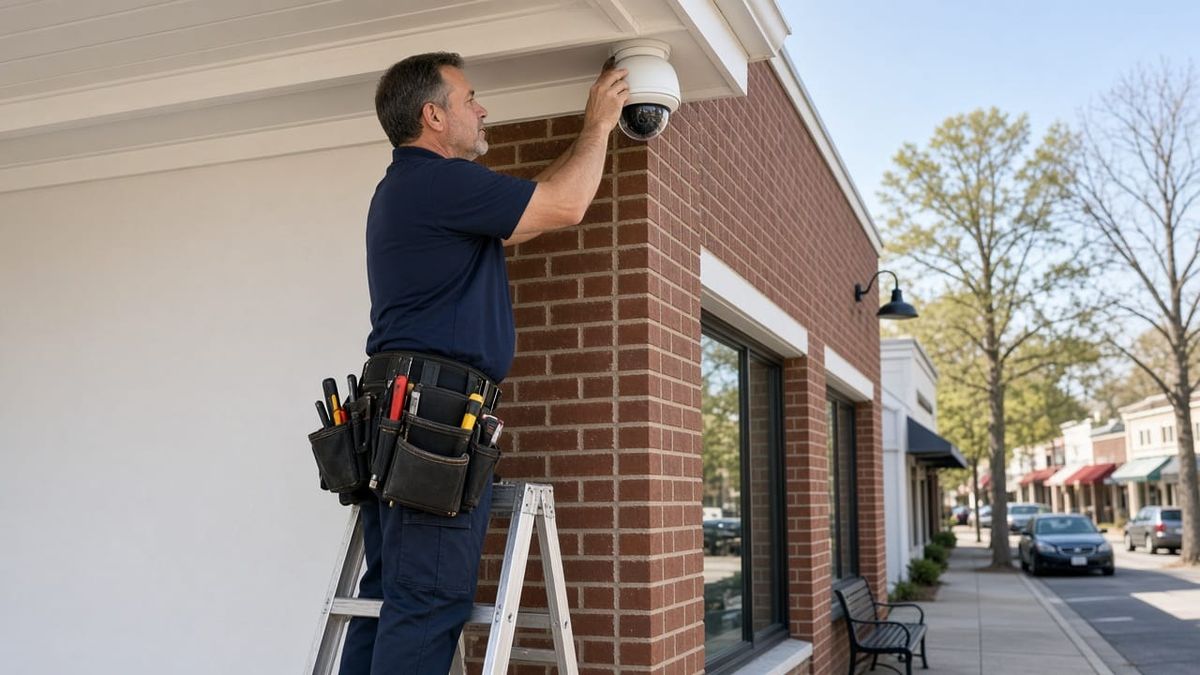
Walk down almost any street in Marietta, Kennesaw, Woodstock, Canton, Roswell, or Alpharetta and you will spot a Wyze, Blink, or Ring camera, and plenty of small shops in Smyrna, Acworth, and Sandy Springs use them too. That makes sense. These cameras are affordable, easy to set up, and good at what they do.
So why does Alpha LVC recommend NDAA-compliant Luminys systems for businesses? It comes down to where your video lives, who can reach it, and whether you can document what is inside the equipment.
Credit Where It Is Due
Consumer cameras have earned their popularity:
- Low entry price. You can cover a porch or driveway for far less than a professional system.
- Simple apps. Setup takes minutes, and alerts, live view, and two-way talk work from your phone.
- Useful services. Optional cloud plans add saved clips and smarter alerts for a modest monthly fee.
- Real privacy investments. Ring has offered optional end-to-end video encryption since 2021 and in 2026 announced TAKE, a new default encryption that it says leaves customers holding the keys to their videos.
For a lot of homes, that is a reasonable choice. The trade-offs are worth knowing, though.
The Trade-Off: Your Video Lives in Someone Else's Cloud
Cloud cameras send footage to the maker's servers. That is what makes them convenient, and it is also why privacy questions come up. A few documented examples:
- Ring and the FTC. In 2023 the FTC charged that Ring allowed any employee or contractor to access customers' private videos and failed to put basic security protections in place. Ring agreed to pay $5.8 million for refunds. Ring said it disagreed with the allegations and denied violating the law, and that it had addressed the issues years earlier.
- Ring and police requests. Amazon confirmed to a U.S. senator in 2022 that Ring gave police footage without owners' consent 11 times so far that year under emergency requests. In 2025 Ring launched Community Requests, which lets verified local agencies ask users for video. Sharing is optional, and Ring later announced it would expand the program to agencies using Flock Safety's platforms.
- Wyze account mix-ups. In February 2024, Wyze told customers that during an outage recovery about 13,000 users received thumbnails from cameras that were not their own, and 1,504 tapped on them. It was the second such incident in five months. Wyze blamed a third-party caching library and changed its systems.
- Blink and Amazon. Blink has been owned by Amazon since 2017. Its privacy notice says it is not in the business of selling customer data, but it does share personal information with affiliates and service providers and releases it when it believes doing so is appropriate to comply with the law.
None of this means these companies are bad actors. It means a cloud account is only as private as the company's policies, people, and systems.
What "NDAA Compliant" Actually Means
The term comes from Section 889 of the FY2019 National Defense Authorization Act, carried out through the federal acquisition rules. It covers telecom equipment from Huawei and ZTE, plus video surveillance and telecom equipment from Hikvision, Dahua, and Hytera, including their subsidiaries and affiliates, when that equipment is used for public safety, government facility security, critical infrastructure, or other national security purposes.
Section 889 bars federal agencies from buying that equipment. It also bars them from contracting with companies that use it as a substantial or essential part of any system. A related federal rule keeps grant and loan recipients from spending those funds on it.
It does not make any camera illegal for a homeowner or private business. Wyze, Blink, and Ring are not among the companies it names. But they are also not marketed or certified as NDAA compliant, as far as we could find, so if you ever need to document compliance, you have nothing to point to.
Why We Recommend Luminys for Businesses
Luminys Systems Corporation, a U.S.-based subsidiary of Taiwan-based Foxlink, states that its branded products comply with Section 889 and contain no components, technologies, or subassemblies sourced from the covered companies. It also publishes a product lookup so you can verify a specific model.
For a business, that matters if you hold or bid on federal contracts or receive federal grants, and it gives you a clear answer when an insurer, landlord, or customer asks what you have installed. Beyond compliance, the systems we install record to a local NVR on site, with infrared night vision, perimeter alerts, and phone viewing. Your footage stays on equipment you control, and the storage you choose sets how long it is kept. Our footage retention guide covers how to choose that window.
Homeowners who want pro-grade video, local recording, and documented hardware can get the same system.
Already Have DIY Cameras at Home? Keep Them
For most residential customers, we are not going to tell you to rip out a working Wyze or Ring camera. Turn on two-factor login, use the strongest encryption your app offers, and review your sharing settings. Then pair those cameras with a professionally monitored alarm so someone responds when a door or motion sensor trips. Our guide to pairing DIY cameras with a monitored alarm explains how the two work together.
Talk to a Local, Licensed Installer
Alpha LVC (Georgia license LVU406567) designs and installs NDAA-compliant Luminys camera systems and monitored alarms for homes and businesses across Cobb, Cherokee, and Fulton, including Marietta, Kennesaw, Acworth, Smyrna, Mableton, Woodstock, Canton, Roswell, Alpharetta, Johns Creek, and Sandy Springs.
Call or text 470-295-5382 or email info@alphalvc.com to schedule an assessment. You can also visit alphalvc.com.