Already Have Wyze or Bulb Cameras? Pair Them With a Monitored Alarm

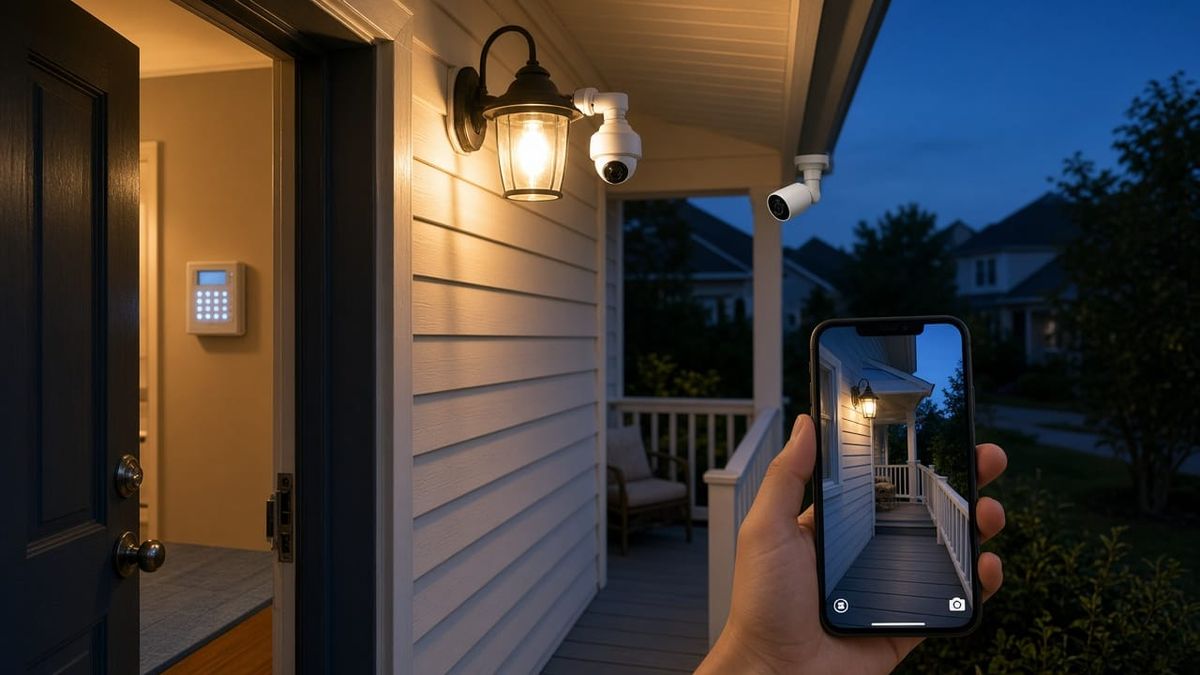
A lot of homeowners around Cobb, Cherokee, and North Fulton tell us the same thing: "I already have cameras." Maybe it's a Wyze Cam v4 on the porch, a solar camera on the back fence, or a light-bulb camera screwed into the garage light.
Those cameras are useful. But a camera on its own mostly tells you what happened after the fact. Pairing it with a professionally monitored alarm system gives you both: someone who responds when the alarm goes off, and your own eyes on the property from your phone. The two don't have to be wired together for it to work.
How the Combination Works
Think of it as two separate layers doing two different jobs:
- The monitored alarm responds. When a door contact, motion sensor, or glass-break detector trips, the panel signals the central station. They follow your call list and dispatch police when needed, whether you're at work, asleep, or out of town.
- Your DIY cameras let you see. When you get the alarm call or a camera alert, open the camera app and look. Is it the dog sitter who forgot the code, or someone at the back door? That context helps you decide what to tell the monitoring operator.
- The clips help afterward. Saved video can be shared with the responding officer or your insurance adjuster.
- Both deter. Yard signs, window decals, and visible cameras all tell someone to keep moving.
The cameras aren't connected to the alarm panel, and they don't need to be for this to help.
DIY Cameras That Pair Well With Monitoring
Wyze Cam v4. A small wired camera with 2.5K QHD video, color night vision, a motion-activated spotlight, a built-in siren, and two-way talk. It's rated IP65 for indoor or outdoor use (outdoors needs Wyze's outdoor power adapter, sold separately) and can record locally to a microSD card. Good for porches, garages, and inside entry points.
Outdoor solar-powered cameras. Battery cameras with a small solar panel are handy for spots without an outlet, like a back fence, detached shed, or side gate. Mount the panel where it gets real sun, and expect motion-triggered clips rather than nonstop recording.
Light-bulb cameras. These screw into an existing light socket, so there's no wiring to run. They're a simple way to cover a porch, carport, or garage. Keep the light switch on, or the camera loses power.
Be Honest About the Limits
DIY cameras paired this way are a helpful add-on, not a replacement for the alarm. Know going in:
- They aren't integrated. Arming or disarming the alarm doesn't control the cameras, and a camera alert doesn't trigger the alarm.
- The central station can't see your cameras. Monitoring operators respond to alarm signals, not your DIY video. You're the one checking the footage.
- Wi-Fi and cloud dependence. If your internet or Wi-Fi drops, or the power goes out, remote viewing and cloud clips may stop. Local microSD recording helps on cameras that support it.
- Subscriptions vary. Some features, like cloud history or smarter detection, may require a separate paid plan from the camera maker.
- Not built for businesses. Consumer cameras aren't NDAA-compliant and aren't designed for commercial recording, retention, or liability needs.
Tips to Get the Most From the Combo
- Put cameras where alarm sensors are: front door, back door, garage entry.
- Turn on push alerts, but tune motion zones so cars and trees don't flood your phone.
- Add a microSD card where supported so you still have footage if the internet drops.
- Keep camera and alarm apps on the same phone and keep your monitoring call list current.
- Register your alarm with your city or county. See our guide: How to Register Your Alarm in Cobb, Cherokee, and Fulton.
For Businesses: Go Pro-Grade
This DIY approach is for homes. Businesses need more: NDAA-compliant, professionally installed cameras like Luminys, with a proper recorder, defined retention, and footage that holds up when it matters. AlphaLVC designs and installs these systems for businesses across Metro Atlanta.
Add Monitoring to the Cameras You Already Have
AlphaLVC is a local, licensed low-voltage contractor (Georgia license LVU406567) serving homes across Acworth, Alpharetta, Atlanta, Canton, Johns Creek, Kennesaw, Marietta, Roswell, Sandy Springs, Smyrna, and Woodstock, plus Brookhaven and Dunwoody.
Already have a DSC or Honeywell alarm panel? In many cases we can take it over and get you on professional monitoring for $29.99/month. No need to toss your cameras. Keep them, and add real response behind them.
Call or text 470-295-5382, email info@alphalvc.com, or request an assessment.