

If you are comparing Alpharetta commercial alarm systems for a business in Metro Atlanta, start with how your premises operate. Multiple entry points, work areas, and closing routines affect what needs coverage and how the system should be planned.
A site survey helps identify the doors, interior zones, and operating needs that should shape the plan. Staff routines matter too: note who opens and closes, when deliveries arrive, and whether anyone works after regular business hours. Professional installation connects the plan to equipment placement and setup, while 24/7 professional monitoring adds ongoing oversight of alarm events.
This guide explains how to define alarm coverage, plan for monitoring, and consider how alarms fit within a broader security stack. You’ll find practical steps for planning a tailored commercial system for your Metro Atlanta business.
Key Takeaways
- Plan Metro Atlanta commercial alarm systems around your entry points, site layout, staff routines, and operating hours.
- Use a site survey to identify where alarm coverage is needed before installation begins.
- Coordinate professional installation with 24/7 professional monitoring, without assuming a guaranteed response time.
- AlphaLVC provides installation, maintenance, and monitoring to support a tailored security plan for Metro Atlanta businesses.
Metro Atlanta Commercial Alarm Systems: Start With Your Site and Operating Needs
What needs protection during business hours, and what changes after staff leave? Commercial alarm systems for Metro Atlanta businesses should reflect how the premises are used, rather than assume every business needs the same equipment. Start by mapping the entrances, occupied spaces, and routines that shape daily access.
A storefront with a public entrance, a staff-only area, and a separate delivery door has different coverage considerations from an office with scheduled staff entry. Business hours, who is authorized to enter, and whether approved activity continues after closing all help determine when and where alarms should monitor access. The Alarm device overview describes different alarm types. For a commercial plan, focus on the devices and coverage suited to your site.
What should a business identify before planning alarm coverage?
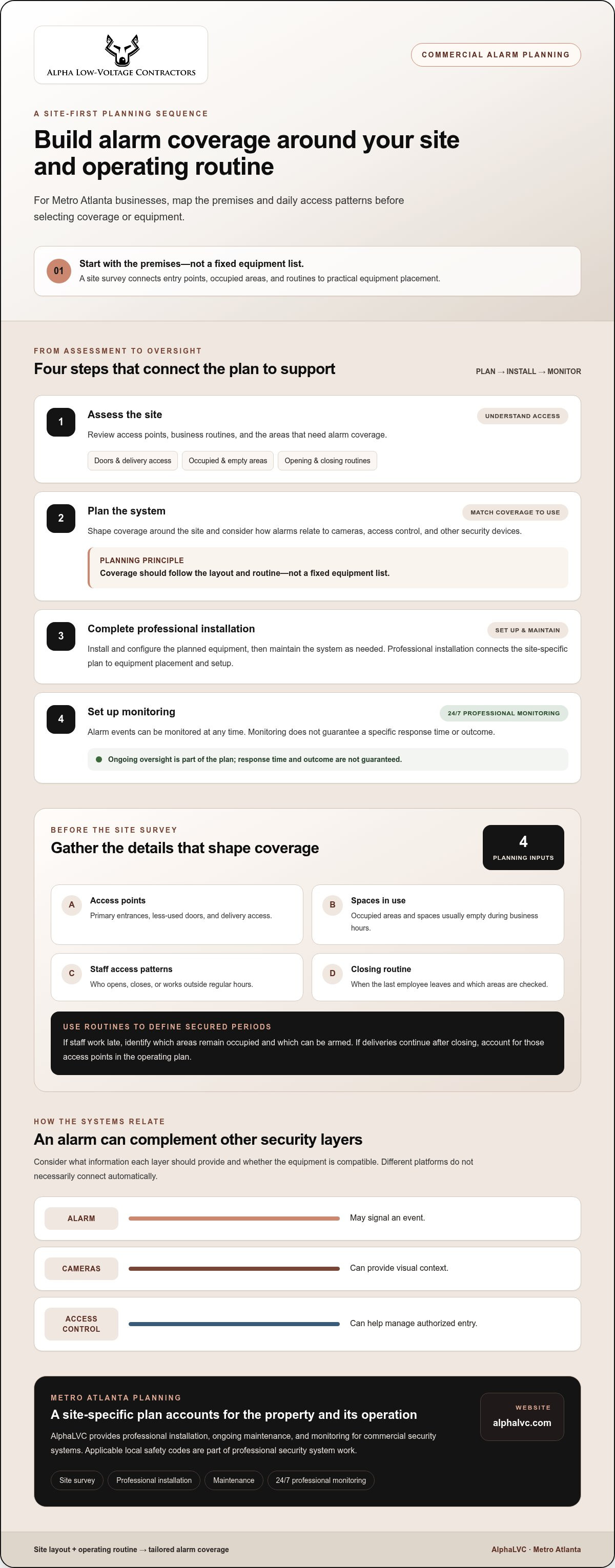
Before planning, walk through the premises and note how people move through it. Record:
- Primary entrances and less-used access points, including doors used for deliveries.
- Occupied areas and spaces that are usually empty during business hours.
- Staff access patterns, including who opens, closes, or works outside regular hours.
- Closing routines, such as when the last employee leaves and which areas are checked.
These details help distinguish normal activity from periods when the premises should be secured. If staff work late, identify which areas remain occupied and which can be armed. If deliveries continue after closing, consider how those access points fit into the operating plan. Coverage should follow the layout and routine, not a fixed equipment list.
A site survey is an on-site assessment to identify entry points, vulnerabilities, and optimal hardware placement. It connects your building’s layout and access routines to practical equipment placement. For businesses in Metro Atlanta, a site survey gives professional planning a clear starting point and helps shape alarm coverage around the actual premises.
How Professional Installation and 24/7 Monitoring Support Commercial Alarms
Reliable alarm protection depends on more than selecting equipment. The process begins with a site assessment, moves to a coverage plan, and continues through professional installation, maintenance, and monitoring. This sequence connects the business’s needs to how the system is set up and supported.
- Assess the site. Review access points, business routines, and the areas that need alarm coverage.
- Plan the system. Match coverage to the site and consider how alarms relate to cameras, access control, and other security devices.
- Complete professional installation. Install and configure the planned equipment, then maintain the system as needed.
- Set up monitoring. 24/7 professional monitoring means alarm events can be monitored at any time. It does not guarantee a specific response time or outcome.
Professional installation connects a site-specific plan to equipment placement and setup, supporting reliable system operation. For more detail on the installation process, see this commercial security system installation guide.
How do alarm systems fit into a broader security stack?
An alarm can complement surveillance cameras and access control. An alarm may signal an event, cameras can provide visual context, and access control can help manage authorized entry. During planning, consider what information each layer should provide and whether the equipment is compatible. Integration depends on the systems involved, so do not assume that different platforms connect automatically. The commercial access control guide covers access management in more detail.
Fire alarm systems have separate planning and code considerations. The NFPA 72, National Fire Alarm and Signaling Code is a reference for fire alarm and signaling systems, distinct from commercial security alarms. AlphaLVC provides commercial alarm planning and monitoring for businesses across Metro Atlanta.
Plan Commercial Alarm Installation in Metro Atlanta With AlphaLVC
Commercial alarm planning works best when installation, maintenance, and monitoring are treated as connected parts of the system. AlphaLVC supports businesses across Metro Atlanta with a site-focused approach that considers how the premises operate and how security equipment fits the business’s needs. Review AlphaLVC security services to see how installation, maintenance, and monitoring can support your site.
Local expertise matters during planning. AlphaLVC considers applicable local safety codes as part of professional security system work. Requirements can differ by property, so the plan should account for the premises and its operating needs rather than prescribe identical equipment for every business.
What happens when a business begins planning an alarm system?
Planning starts with a focused discussion about your operations, access points, and security priorities. Gather details that can help define the project:
- How staff, vendors, and visitors access the premises.
- Which areas need alarm coverage during business hours and after closing.
- What routines or changes in occupancy affect how the site is secured.
- Whether maintenance and 24/7 professional monitoring should support the installation.
This information gives AlphaLVC a practical basis for tailoring the approach to your project. Equipment selection and installation planning should account for the site, rather than rely on a fixed equipment list or assumed timeline. That keeps the plan focused on your property and day-to-day operations.
If you’re considering Alpharetta commercial alarm systems, outline your site’s layout, access routines, and main security concerns. AlphaLVC provides professional installation, ongoing maintenance, and monitoring for commercial security systems. Discuss commercial alarm needs with AlphaLVC to plan protection around your business.
Set a Clear Next Step for Your Business
Turn your security concerns into a short planning brief. Note what you want protected, how people use the premises, and any operating changes that could affect coverage. This creates a focused starting point for discussing Alpharetta commercial alarm systems and how a tailored plan can support your business over time.
You do not need to settle on equipment before the site’s priorities are clear. A discussion about your premises can help shape a practical plan around the way your business operates. AlphaLVC serves commercial customers across Metro Atlanta with installation, maintenance, and monitoring.
Discuss commercial alarm system planning with AlphaLVC and take the next step toward a plan built around your site.
Frequently Asked Questions
Can a commercial alarm system work alongside security cameras and access control?
Yes. Alarms, cameras, and access control can serve complementary roles in a business security plan. For example, an alarm event may prompt staff to review nearby camera footage, while access records can help clarify who entered an area. How devices connect depends on the equipment and system design, so plan integration around verified compatibility rather than assuming every platform works together.
Does my business need 24/7 professional monitoring?
Consider 24/7 professional monitoring if you want alarm events monitored outside staffed business hours. It may suit premises that are empty overnight or during planned closures. Alpharetta commercial alarm systems can be planned around your operating schedule and monitoring needs. Monitoring does not guarantee a specific response time or outcome, so include your preferred procedures for handling alarm events in your planning.
What should I prepare for a commercial alarm site survey?
Bring a floor plan if available, notes about recent renovations, and details about existing alarm equipment. Identify who manages system access and who should understand routine operation. It also helps to note recurring issues, such as doors that are frequently left open during deliveries. These details can make the assessment more useful without requiring you to select equipment in advance.
How often should a commercial alarm system be maintained?
Follow the maintenance schedule recommended for your installed equipment, since needs can vary by system and site. Arrange a review if devices show faults, alarm events behave unexpectedly, or business changes affect system use. Keep a record of maintenance and issues for reference. AlphaLVC provides security system maintenance for commercial customers in Metro Atlanta, supporting continued attention to system condition and operation.


