Office Building Security in Metro Atlanta: A Practical Guide
Plan your Sandy Springs office building security across Metro Atlanta. Learn how site surveys, access control, and 24/7 monitoring build a security stack.


A camera at the main entrance cannot address an uncontrolled side door or an alarm that goes unanswered. Office security works best when each layer supports the others.
If you’re planning Sandy Springs office building security in Metro Atlanta, start by reviewing entry points, shared spaces, camera placement, and monitoring needs. A connected security stack can bring access control, surveillance cameras, alarms, and 24/7 professional monitoring into one coordinated plan.
This guide explains how to assess your building’s needs, connect the right security layers, and prepare practical questions before installation. You’ll also learn how a site survey, structured cabling, professional installation, and attention to local safety codes can support reliable system operation. AlphaLVC installs and maintains commercial security systems across Metro Atlanta, helping building teams plan coverage around their property and daily operations.
Key Takeaways
- Plan office building security in Metro Atlanta around entrances, tenant areas, deliveries, and after-hours access.
- Use a site survey to map access points, identify coverage gaps, and guide hardware placement.
- Connect cameras, access control, alarms, and monitoring so the system’s layers work together.
- Understand how remote management and cloud‑based management can support day-to-day security oversight.
Table of Contents
- Office Building Security in Metro Atlanta: Build a Connected Security Stack
- Plan Office Building Security with a Site Survey and Clear Priorities
- Connect Office Cameras, Access Control, and Monitoring in Metro Atlanta
Office Building Security in Metro Atlanta: Build a Connected Security Stack
Planning office building security in Metro Atlanta means looking beyond the front door. Buildings may have shared entrances, tenant areas, delivery access, and changing after-hours occupancy. These patterns call for clear rules about who can enter each area and how security devices work together.
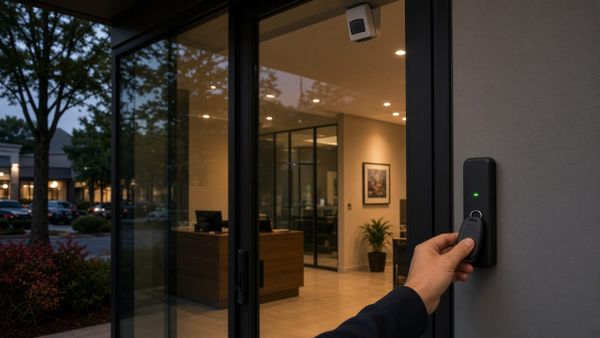
A security stack is the connected set of alarms, cameras, access control, and networking used to manage building security. Each layer has a distinct role: access control manages authorized entry, surveillance cameras provide visual coverage, alarms signal selected events, and 24/7 professional monitoring adds a monitored response layer. Networking connects devices so information can be managed across the system. Together, these layers support visibility, controlled entry, and response planning. The Physical Security Overview also describes how electronic systems fit within broader physical security measures.
Which security layers protect an office building?
Start at the perimeter and work inward. The Three-Layer perimeter strategy divides coverage into primary entry points, transitional spaces, and yard corners. At an office building, primary entry points may include staffed or credential-controlled doors. Transitional spaces can include lobbies and corridors, while yard corners may include exterior areas that need camera coverage. A site-specific layout helps show how these areas connect.
- Access control: Set entry permissions for employees, tenants, and other authorized users.
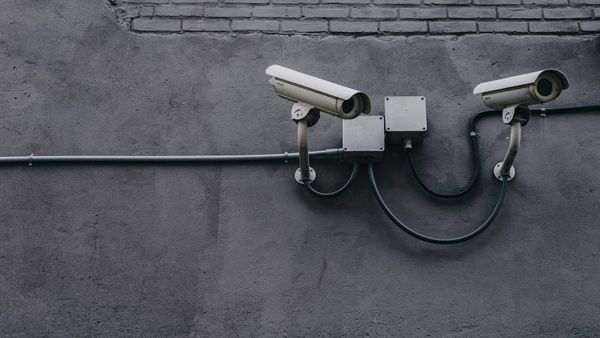
- Surveillance cameras: Plan views of entrances, shared spaces, and exterior approaches.
- Alarms: Identify events that should generate a signal for review or action.
- Monitoring: Connect alarm events to 24/7 professional monitoring as part of the overall plan.
Review how the layers work together. For example, access records and camera views can help clarify activity at a controlled entrance. In Metro Atlanta, professional installation and maintenance help align equipment placement, networking, and system operation with the building’s needs.
Plan Office Building Security with a Site Survey and Clear Priorities
A useful plan starts with how people and deliveries move through your building. For Sandy Springs office building security, a site survey connects those daily patterns to equipment placement and system design. Use this sequence to prepare:
- Map entrances. Mark employee and visitor doors, loading areas, tenant entrances, and restricted access points.
- Identify operating needs. Note tenant schedules, delivery routines, shared spaces, and areas that need controlled access.
- Assess coverage. Review camera sightlines and look for blind spots in lobbies, corridors, delivery zones, and exterior approaches.
- Plan system connections. Map how cameras, access control, alarms, and network connections will work together.
What should a commercial security site survey assess?
Walk the property during normal operations and consider staff, tenant, and delivery movement. Check whether doors and shared areas have suitable coverage, and whether camera views capture useful activity without obstructions. For outdoor cameras, account for humidity and nearby surfaces that may reflect infrared light and cause infrared ghosting in night footage. A professional assessment helps identify practical hardware positions in shared and restricted areas.
Plan connectivity alongside equipment placement. Structured cabling provides an organized network path for security devices. Cat6A can support networked devices, but the appropriate design depends on the building and system requirements. AlphaLVC provides professional installation and maintenance for commercial security systems across Metro Atlanta, with attention to local safety codes and site conditions.
Use the survey findings to guide decisions about commercial access control installation and camera coverage. A coordinated design accounts for where credentials are needed, what each camera should capture, and how devices connect. This groundwork makes installation decisions clearer before work begins.

Connect Office Cameras, Access Control, and Monitoring in Metro Atlanta
Once you have a site plan, coordinate the equipment and its ongoing operation. AlphaLVC provides professional installation and maintenance for commercial surveillance cameras, access control, and security systems, with 24/7 professional monitoring as an additional response layer. For Sandy Springs office building security, a coordinated design aligns what devices capture, which doors they control, and how system events are handled.
What professional installation and monitoring add
Hardware placement is only part of the work. Structured cabling and low-voltage cabling connect devices to the network, while system configuration sets how access credentials, cameras, and alarms operate together. Professional installation helps position and configure devices according to the building plan. Ongoing maintenance supports system operation as equipment and building needs change.
Monitoring adds a human response layer to alarm signals. It does not replace access control or camera coverage, and it cannot guarantee a particular outcome. It gives your security plan a defined way to handle alarm events beyond the building’s own devices.
Management options depend on the selected system. Remote management means controlling devices from a distant location through a network or internet connection. Cloud‑based management refers to administering devices through an internet-hosted platform. The terms can overlap, but describe different aspects of how you access and manage the system.
AlphaLVC brings a low-voltage contractor license and knowledge of local safety codes to commercial security projects in Metro Atlanta. Learn about commercial security installation and maintenance and how these services can fit your building’s needs.
For a consultation, share your site survey findings, access priorities, and preferred monitoring approach with AlphaLVC. These details give the installation plan a practical starting point.
Set Your Building’s Next Security Priority
Security planning should keep pace as tenant needs, access routines, and building operations change. Choose a practical next step: document the entry point or shared area that needs attention first, then use that priority to guide your system plan. For Sandy Springs office building security, a focused discussion can turn your building’s needs into a plan for installation and ongoing maintenance.
AlphaLVC provides professional installation and maintenance for commercial security systems, 24/7 professional monitoring, and service backed by a low-voltage contractor license and Metro Atlanta expertise. Consider how these services can support your building as its needs evolve. Discuss office building security with AlphaLVC and take a clear next step toward a coordinated plan. A defined priority gives your team a practical place to begin.
Frequently Asked Questions
Is 24/7 professional monitoring necessary for an office building?
24/7 professional monitoring can add an around-the-clock response layer. Whether it suits your building depends on operating hours, security procedures, and system design. Monitoring handles alarm signals, cameras provide visual information, and access control manages entry permissions. A building that closes overnight may have different monitoring needs from one with staff working late. No single measure guarantees safety.
Can an office security system cover multiple tenant areas?
Yes. Sandy Springs office building security can cover shared entrances and tenant-specific spaces, with access permissions and camera coverage shaped around building operations. A site survey can help distinguish common areas from restricted suites and show how employees, visitors, and service staff move between them. During planning, define which users need access to each area and where camera coverage is appropriate.
What happens to office security when the internet connection is interrupted?
System behavior during an internet interruption depends on the equipment, configuration, and connection design. Some functions may rely on network or internet access, so don’t assume devices will continue operating or that video will be retained. During planning, identify which devices depend on internet connectivity, what interruption alerts may be available, and what steps building staff should follow while service is disrupted.
How often should office security access permissions be reviewed?
Review access permissions when staffing, tenant occupancy, or job responsibilities change, and set a recurring review process that fits your building’s operations. A tenant move-out or employee departure, for example, is a prompt to check whether access still matches current duties. An audit trail, a recorded history of system events, can help administrators review activity, but it does not set a required review interval.