Access Control for Small Businesses in Metro Atlanta: Doors, Locks, and Rules That Actually Work

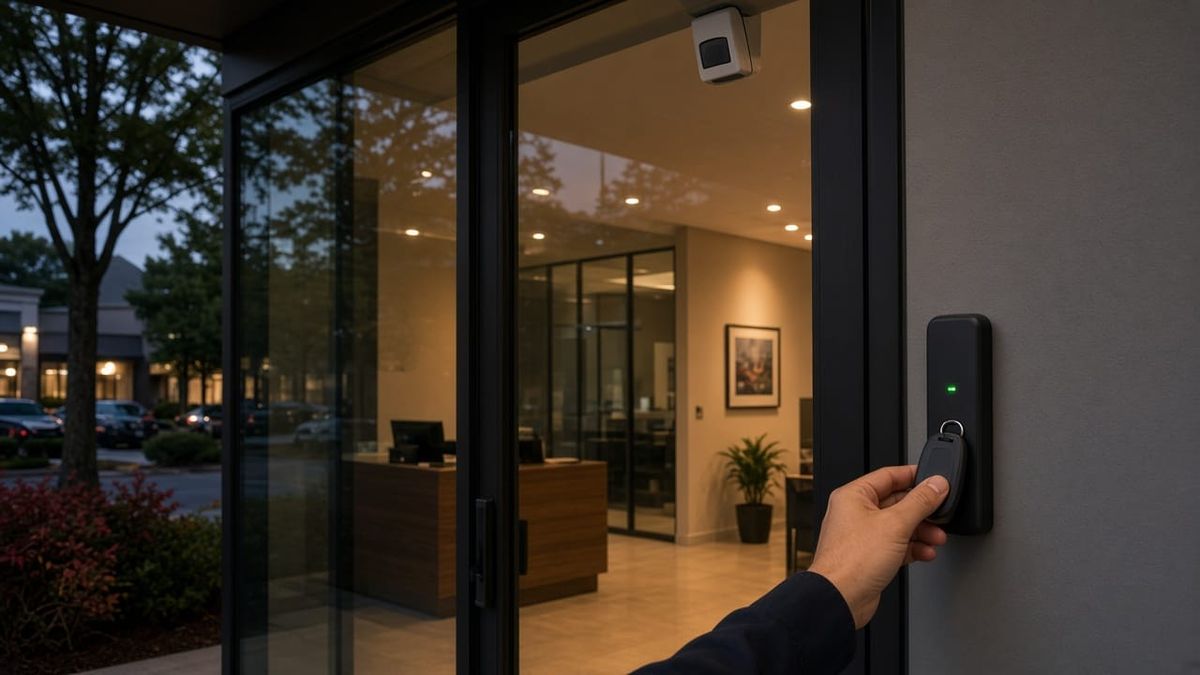
If you run a shop, office, clinic, or warehouse, you already know the key problem. An employee leaves, a manager loses a key ring, or a cleaning crew changes, and suddenly you're paying to rekey and handing out new copies again.
Card and fob access fixes that, but only when it's planned around how your business actually works. Here's what small business owners around Marietta, Kennesaw, Smyrna, and Alpharetta should think about before putting readers on the doors.
Start With the Doors, Not the Gadgets
Walk your space and list every opening people use: the front entrance, the back or delivery door, the stock room, the office with the safe, the server or network closet, and any gate on the lot. Then ask two questions for each one. Who needs to get through it, and when?
Not every door needs a reader. A front entrance that's unlocked all day might only need a schedule and a reader for early arrivals. A back door that should stay locked might need one every time. Rooms with cash, records, or inventory usually deserve their own reader so access is limited to the few people who need it.
Picking the Right Lock Hardware
The reader is the part people see, but the lock on the door does the real work. Common options include:
- Electric strikes, which replace the strike plate in the door frame and release the latch when a valid credential is presented. They work well on many standard doors and keep the existing handle.
- Electrified locksets and exit devices, where the lock or push bar itself is electrically controlled. These are common on commercial storefronts and glass doors.
- Magnetic locks, which hold the door closed with a strong magnet. They have their place, but they come with stricter requirements for safe exit, so they need careful planning.
The right choice depends on the door, the frame, and how the door is used. A good installer will look at the hardware you already have before recommending anything new.
Fail-Safe vs Fail-Secure
This sounds technical, but it matters. When power goes out, a fail-secure lock stays locked from the outside, and a fail-safe lock unlocks. Doors protecting stock rooms and offices are often set up fail-secure. Doors along a path people use to leave the building need to let people out no matter what.
That leads to the most important rule in access control.
People Must Always Be Able to Get Out
Access control decides who gets in. It should never trap anyone inside. Exits need a simple way out, such as a lever, a push bar, or a request-to-exit sensor or button that releases the door. Depending on the building and the hardware, local fire and building codes may also require doors to release when the fire alarm activates.
Codes vary by building type and jurisdiction, so this is something to confirm during the walkthrough rather than guess at. It's one of the best reasons to work with a licensed contractor instead of a do-it-yourself kit.
Schedules, Roles, and After-Hours Rules
Once the doors are set, the rules are where you save time:
- Business-hours schedules unlock the front door at opening and lock it at close, so nobody forgets
- Roles give managers, staff, cleaners, and vendors different access without setting up each person from scratch
- After-hours limits keep the back door and stock room closed to everyone except the people you choose
- Holiday and closure overrides keep the building locked on days you're closed
When someone leaves the company, you turn off their card or fob in minutes. No rekeying and no wondering who still has a copy.
Managing It From Your Phone
Many current systems can be managed from a web portal or phone app. That lets you unlock a door for a delivery while you're off site, add a new hire before their first day, or check who opened the back door last Saturday. Audit logs give you a clear record of entries and denied attempts, which is helpful for theft questions, insurance, and peace of mind.
If you have more than one location, one dashboard for all of them makes life easier than juggling separate keys and codes at each store.
Plan for Growth
It costs less to run wire for a future door now than to open walls later. If you expect to add a suite, a second entrance, or a gate, mention it during planning. Readers, cameras, and alarms can also work together later, so think of access control as one piece of your overall security setup.
Get a Clear Access Plan From AlphaLVC
AlphaLVC is a local, licensed low-voltage contractor (Georgia license LVU406567) serving homes and businesses across Metro Atlanta, including Acworth, Alpharetta, Atlanta, Brookhaven, Canton, Cartersville, Dunwoody, Johns Creek, Kennesaw, Mableton, Marietta, Roswell, Sandy Springs, Smyrna, and Woodstock. We design and install card, fob, and phone access for storefronts, offices, back doors, stock rooms, and gates, with schedules and app management that fit how your business runs.
You work with the same licensed installer from walkthrough to completion, with a clear recommendation instead of a hard sell.
Call or text 470-295-5382 or email info@alphalvc.com to schedule a business access control walkthrough. You can also visit alphalvc.com.