Where to Put Security Cameras: A Coverage Plan for Metro Atlanta Homes and Businesses

Good cameras in the wrong spots still miss the moment that matters. A camera that only shows the top of someone's hat, stares straight into the afternoon sun, or covers the front lawn while someone walks down the side yard won't help much when you need footage.
Placement is where a camera system succeeds or fails. Here's how we think about coverage on homes and businesses around metro Atlanta, and the common mistakes worth avoiding.
Start With the Paths People Actually Use
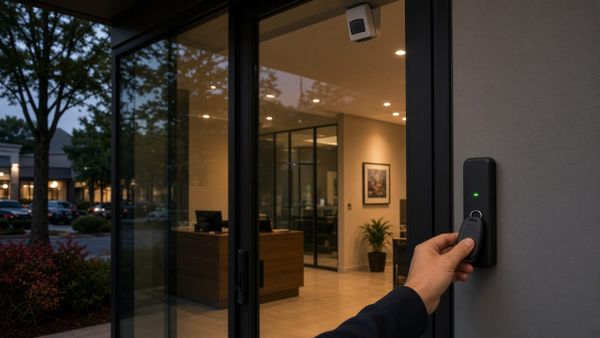
Before picking spots on the wall, think about how someone would get to your property and into it. For most homes that means the front door, the driveway, the garage, a back door or patio slider, and any side gate. For a business it's usually the main entrance, rear and service doors, the parking lot, loading areas, and the register or front counter.
The goal is to cover those paths in two ways: a wide view that shows what happened, and a closer view that shows who did it.
Overview Shots vs. Identification Shots
These are two different jobs, and one camera rarely does both well.
- Overview cameras cover a driveway, yard, or lot so you can follow movement and see the whole event.
- Identification cameras sit closer to a choke point, like a front door, gate, or entry vestibule, where faces and details are large enough in the frame to be useful.
A common mistake is mounting every camera high on the corners of the house. That gives nice overview shots and almost no usable faces. Pairing a wide corner camera with a closer camera at the main entry fixes that.
Key Spots on a Typical Metro Atlanta Home
Front door and porch. This is where package thefts, visitors, and most door knocks happen. A camera at roughly head-to-eave height, aimed at the approach rather than straight down, gives a better face angle.
Driveway and garage. A camera at the garage corner can cover cars, the garage door, and the walk to the front door. Watch out for headlights and street lights shining directly into the lens at night.
Side yards and gates. These are easy to forget, and they're often the quietest way to the back of a house. Many homes in Marietta, Kennesaw, and Woodstock have fenced side yards with a gate that nobody can see from the street, which makes them worth covering.
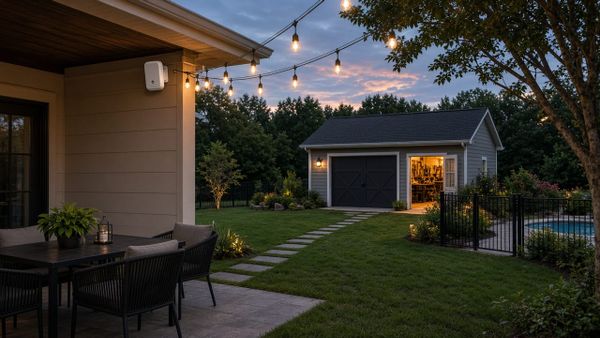
Back door, patio, and pool area. The back of the house usually has less foot traffic and more privacy, which is exactly why it deserves a camera.
Inside, if you want it. An indoor camera facing the main entry or a stairway can confirm what happened if someone gets in. Keep indoor cameras out of bedrooms and bathrooms.
Key Spots for a Business
Businesses usually need more cameras and more careful planning:
- Every exterior door, including the back door that only staff use.
- Parking lots and drive lanes, with wide coverage plus a closer view at the entrance where vehicles slow down.
- Point of sale and front counter, to see transactions and the customer side of the counter.
- Stock rooms, loading docks, and gates, where inventory comes and goes.
- Hallways and choke points inside larger buildings, so you can follow someone from the entrance to where they ended up.
A retail shop in Smyrna, a warehouse in Acworth, and an office in Alpharetta each need a different layout, so the plan should start with a walkthrough of how people move through that specific building.
Placement Mistakes We See Often
- Mounting too high. It feels safer from tampering, but the image often shows the tops of heads.
- Facing the sun or bright lights. West-facing cameras can wash out in late afternoon, and lights in the frame can ruin the night image.
- Ignoring night coverage. A spot that looks fine at noon can be nearly black at 2 a.m. without the right camera or some lighting.
- Leaving gaps between cameras. If someone can walk from the street to a back door without appearing on any camera, there's a blind spot.
- Pointing at the neighbors. Aim cameras at your own property and shared approaches, not into a neighbor's windows or yard.
- Weak Wi-Fi at the edges. Wireless cameras at the far corner of a lot often drop out. Wired cameras on PoE (power over Ethernet, one cable for both data and power) are more reliable.
Don't Forget the Recorder and Remote Viewing
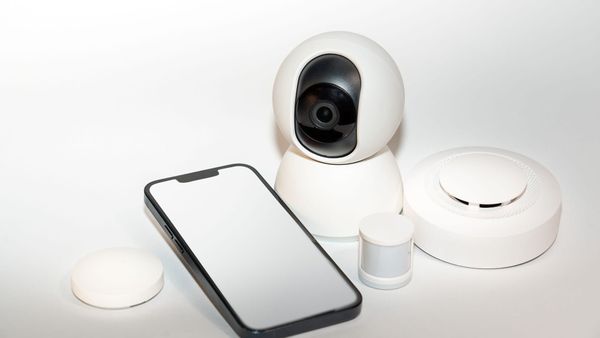
Placement covers what the cameras see. You also need to keep that footage and get to it when you need it. A local recorder (often called an NVR) keeps footage on-site, and an app lets you check live video and playback from your phone. Make sure the recorder is somewhere secure, not sitting in plain view by the front door, and that the system's time and date are correct so clips are easy to find.
Get a Camera Coverage Plan From AlphaLVC
AlphaLVC is a local, licensed low-voltage contractor (Georgia license LVU406567) serving homes and businesses across Metro Atlanta, including Acworth, Alpharetta, Atlanta, Brookhaven, Canton, Cartersville, Dallas, Dunwoody, Hiram, Johns Creek, Kennesaw, Mableton, Marietta, Roswell, Sandy Springs, Smyrna, and Woodstock. You work with the same licensed installer from walkthrough to completion, not a national call center.
Whether you're adding cameras for the first time or fixing a system that keeps missing the important angles, we'll walk the property with you and lay out where each camera should go and why.
Call or text 470-295-5382 or email info@alphalvc.com to schedule a camera assessment. You can also visit alphalvc.com.