Small Business Alarm Systems in Cobb, Cherokee, and Fulton: What a Commercial Setup Should Cover

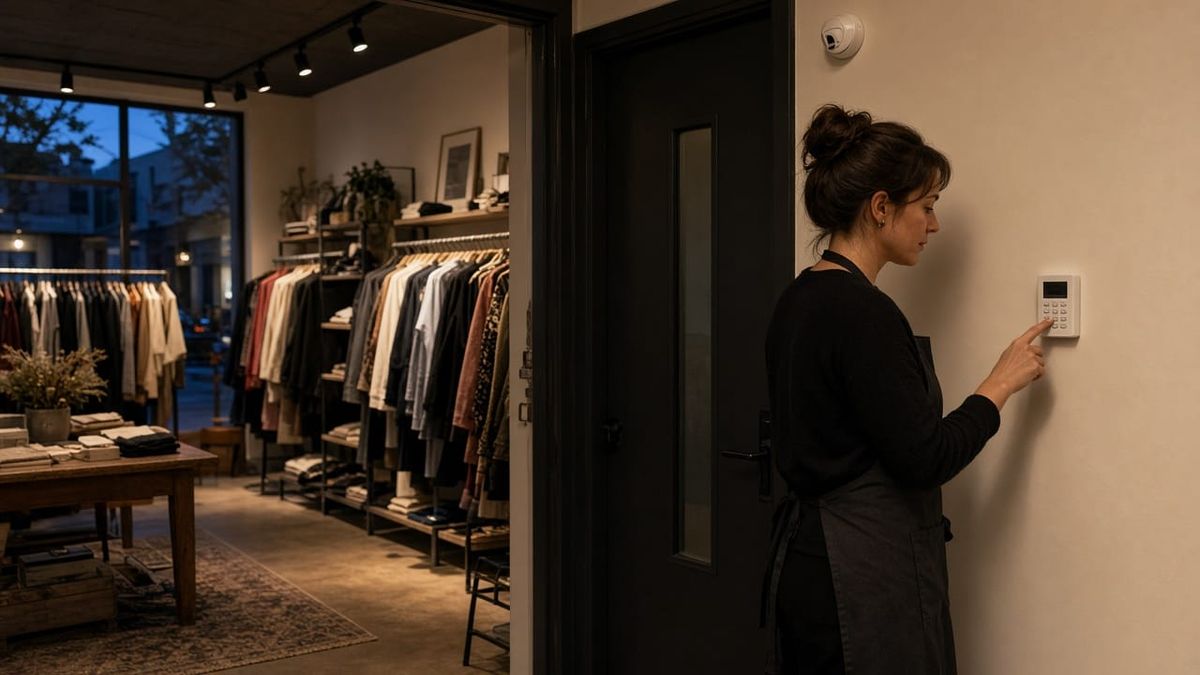
A lot of small businesses have an alarm that came with the building. There's a keypad by the back door, one code that every employee has known for years, and nobody is quite sure which company is monitoring it, or if anyone is.
A business alarm has a different job than a home system. It has to protect the space after hours, handle staff coming and going, and tell the owner what's happening without anyone standing at the keypad. Here's what a solid commercial setup should cover for shops, offices, restaurants, salons, and warehouses across Cobb, Cherokee, and Fulton counties.
Start With How the Space Is Used
Before talking about equipment, walk the property the way your business actually runs it:
- Which doors do staff use to open and close?
- Where are the cash, inventory, records, and network equipment?
- Are there areas only managers should enter, like an office or stock room?
- Does anyone work late, arrive early, or come in on weekends?
- Are deliveries made before opening or after closing?
Those answers shape the system. A coffee shop with one back door needs something very different from a warehouse with a roll-up door and a front office.
Cover the Perimeter and the Spaces That Matter
Doors. Every exterior door gets a contact, including the back door that's "always locked" and any roll-up or overhead doors.
Glass. Storefronts are mostly glass. Glass break sensors listen for breaking glass so the alarm can trip before someone walks through the opening.
Motion. Motion detectors cover the sales floor, hallways, and back rooms. Placement matters: they should be aimed away from HVAC vents, moving signs, and anything else that sways overnight, since those are common causes of false alarms.
Interior zones. An office, cash room, or server closet can be its own area, so it stays protected even while the rest of the building is open.
Give Every Employee Their Own Code
One shared code is one of the most common problems we see. When someone leaves, the code leaves with them, and there's no record of who armed or disarmed the system.
With individual user codes you can:
- See who opened and closed each day
- Remove a code the day someone leaves without changing it for everyone
- Limit codes by schedule, so a cleaning crew's code only works during their window
- Give managers more access than part-time staff
Know When You Opened and Closed
Opening and closing notifications are one of the most useful features for business owners. A modern panel with app control can alert your phone when the system is disarmed in the morning and armed at night, and many setups can warn you if the building isn't armed by a set time.
That means you'll know if the closing shift forgot to arm the system, or if someone came in at an odd hour, without driving over to check.
Panic Buttons and Duress Codes
For businesses that handle cash or work with the public, a panic button under the counter or at a reception desk lets staff call for help quietly. A duress code works the same way at the keypad: it disarms the system like normal while silently signaling the monitoring center that something is wrong.
Reliable Monitoring, Not Just a Siren
A siren alone usually doesn't bring help. Monitoring is what gets a response, and how the panel reports matters. Older systems often relied on a phone line that many businesses have since dropped. Today's systems use cellular communication to reach the monitoring center, so alarms still go through when the phone line or internet is down.
At AlphaLVC, cellular monitoring with app access starts at $29.99 a month, and typical takeovers don't require a long-term contract. We'll confirm terms during your assessment.
Register It and Keep False Alarms Down
Many cities and counties around us require monitored alarms to be registered with local police, and repeated false alarms can lead to fees. If you haven't registered yet, our guide on registering your alarm in Cobb, Cherokee, and Fulton covers where to go.
On the business side, most false alarms come down to a few things: employees who don't know the system, a shared code nobody remembers, and motion sensors placed near things that move. Training each staff member on arming, disarming, and canceling an accidental alarm goes a long way.
Already Have an Older Panel?
You may not need to rip it out. Many existing DSC and Honeywell systems can be inspected and taken over onto cellular monitoring with a modern app, keeping the wiring and sensors that still work. Sometimes the fix is a few new sensors, a battery, and better user codes. Other times a new install makes more sense. A walkthrough tells you which.
Cameras and Door Access Work Better Alongside It
An alarm tells you something happened. Business-grade NDAA cameras show you what happened, and access control with card, fob, or phone readers decides who gets in. Planned together, they share cabling and network equipment and give you one clear picture of the building.
Fire alarm systems follow their own codes and inspection requirements and are typically handled as a separate project from an intrusion alarm.
Get a Clear Next Step
AlphaLVC is a local, licensed low-voltage contractor (Georgia license LVU406567) serving businesses and homes in Cobb, Cherokee, and Fulton counties, including Acworth, Alpharetta, Atlanta, Canton, Johns Creek, Kennesaw, Mableton, Marietta, Roswell, Sandy Springs, Smyrna, and Woodstock. We handle new commercial alarm installs and clean takeovers of existing DSC and Honeywell panels.
Call or text 470-295-5382 or email info@alphalvc.com to request an assessment. We'll walk the space and give you a clear next step, usually a site visit, not a hard sell.