HOA Pool and Tennis Court Access in Cobb, Cherokee, and North Fulton: Why the Off-Season Is the Time to Upgrade

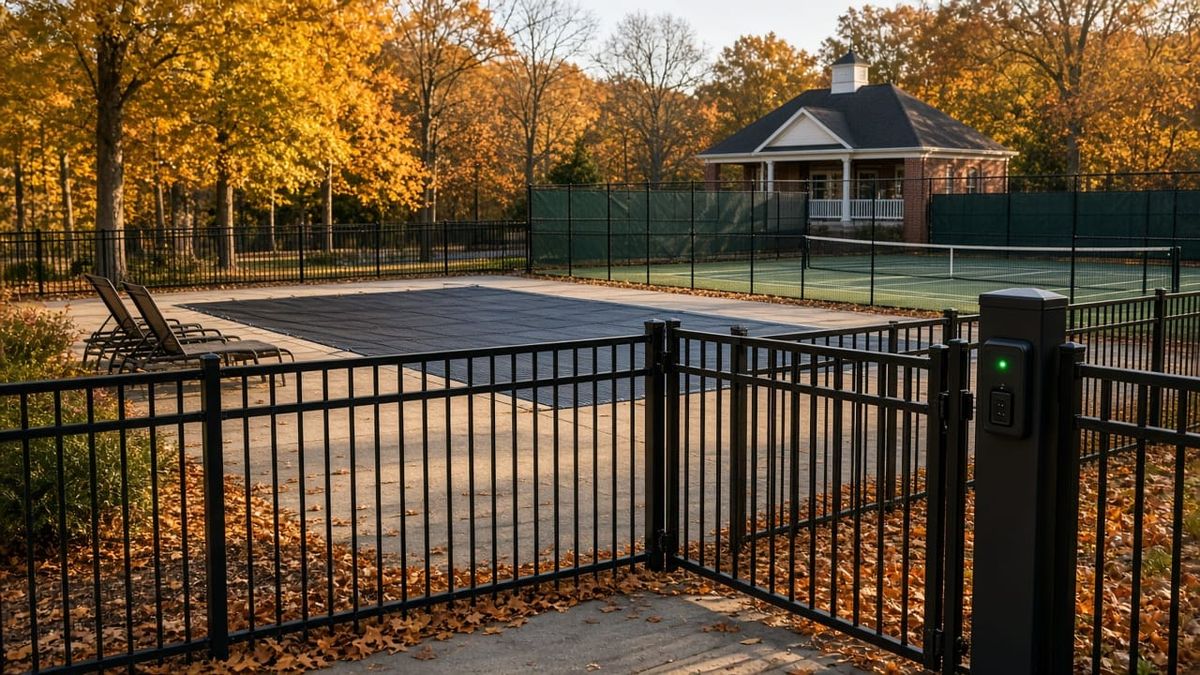
Swim and tennis neighborhoods are a big part of life around Marietta, Kennesaw, Woodstock, Roswell, and Alpharetta. They're also where access control tends to get messy. The pool gate code gets shared in a group text, and keys from three boards ago are still floating around.
The good news is that pools are covered and courts are quiet right now. That makes late fall and winter the easiest time for an HOA or amenity committee to plan and install a better system, so it's ready before opening day.
The Common Problems With Amenity Access
If you sit on an HOA board or amenity committee, a few of these probably sound familiar:
- One code for everyone that never changes, so it eventually belongs to half the zip code
- Physical keys that get copied, lost, or never returned when residents move out
- No record of who came in, which makes after-hours incidents and damage hard to sort out
- No easy way to pause access for a household that's behind on dues or moving away
- Gates propped open or latches that don't close, which is a safety concern around a pool
- Volunteers stuck managing it, handing out keys and resetting codes in their spare time
What a Modern Amenity Access System Does
Instead of a shared key or code, each household gets its own credential. That can be a key fob, a card, a phone credential, or a PIN. Readers at the pool gate, tennis courts, clubhouse, or fitness room check each credential against the rules the board sets.
From there, a manager or board member can handle things from a mobile app instead of a key drawer:
- Add or remove households when homes sell or residents move
- Suspend a credential without changing anything for the rest of the neighborhood
- Replace a lost fob by turning off the old one and issuing a new one
- Review an audit log of which credential opened which gate and when
- Send temporary access to a pool service, a tennis instructor, or a contractor
Set Schedules That Match Your Rules
Schedules are where these systems really earn their keep. Each gate or door can follow its own hours. The pool gate can unlock for residents during posted pool hours and stay locked overnight and through the off-season. The tennis courts can follow a different schedule. The clubhouse might only open for credentialed residents or for reserved events.
Groups can follow different rules too. Residents, lifeguards, maintenance staff, and the pool company don't all need the same access, so each group can get its own hours. When the board changes the rules for next season, the schedules change in the app instead of on a sign everyone ignores.
Hardware Built for Gates and Weather
Outdoor amenities are hard on equipment. Georgia summers bring heat, humidity, and pop-up storms, and pool areas add splashing and chemicals. A few things matter here:
- Weather-rated readers mounted where people naturally approach the gate
- The right locking hardware for the gate, such as an electric strike or a maglock, paired with a closer and latch that actually close the gate behind people
- Free exit from inside, so nobody gets trapped in a pool area or court
- Power and connectivity at the gate, which often means planning a wiring run or a wireless link back to the clubhouse or equipment room
We also look at how the gate behaves day to day. A reader is only as good as the gate it controls, and a latch that doesn't catch defeats the whole system. Pool barrier rules can also affect gate hardware, so it's worth confirming your local requirements before changing anything.
Add Cameras Where They Help
Many HOAs pair amenity access with a few cameras at the pool entrance, the court gates, and the clubhouse doors. When an access log shows a gate opened at 1 a.m., having video of that entrance makes it much easier to figure out what happened. Some communities also add Wi-Fi at the clubhouse or pool deck, which can support the access system, cameras, and residents' devices. If you're curious how these systems can work together, our guide to integrated cameras, alarms, and access control covers the basics.
A Simple Off-Season Plan for Boards
- List every entry point: pool gates, court gates, the clubhouse, the fitness room, restrooms, and any maintenance doors
- Write down the rules: who gets in, during which hours, and what happens when someone moves or falls behind on dues
- Decide on credentials: fobs, cards, phone access, PINs, or a mix
- Walk the site with an installer to check gate hardware, power, and network options
- Plan the rollout: how fobs get handed out and how residents register before the season starts
Getting this done in the colder months means residents can pick up credentials in the spring, and the first hot Saturday isn't spent sorting out gate codes.
Talk to AlphaLVC About Your Amenity Access
AlphaLVC is a local, licensed low-voltage contractor (Georgia license LVU406567) serving homes, businesses, and communities across Cobb, Cherokee, and North Fulton, including Marietta, Kennesaw, Acworth, Smyrna, Woodstock, Canton, Roswell, Alpharetta, Johns Creek, and Sandy Springs. We install card, fob, and phone access for pool amenities, tennis courts, clubhouses, doors, and gates, with schedules, audit logs, and codes managed from a mobile app. Whether it's a single pool gate or a full amenity center with readers, cameras, and Wi-Fi, the same licensed installer handles it from walkthrough to completion.
Call or text 470-295-5382 or email info@alphalvc.com to set up a site walk for your community.