Will Your Alarm Still Call for Help When the Power Goes Out?

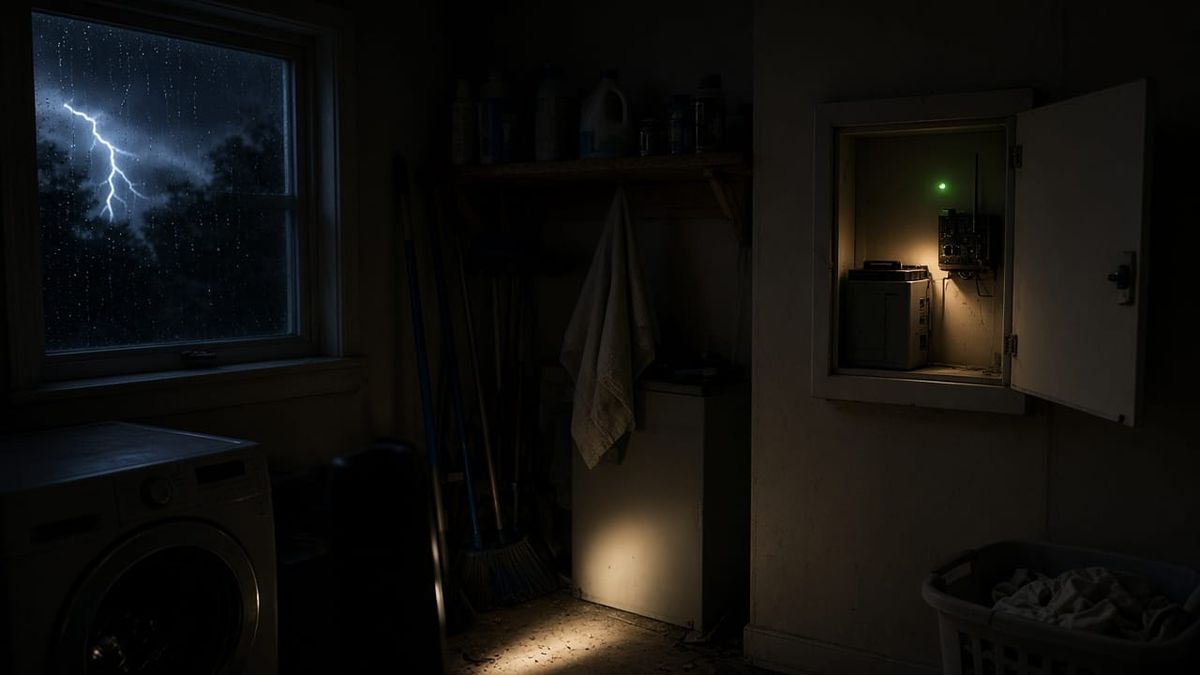
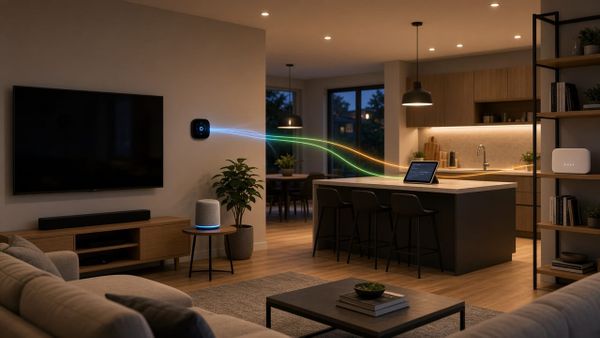
Picture a fall storm rolling through Marietta or Woodstock at 2 a.m. The power flickers off, the router goes dark, and the house gets quiet. Is your alarm still able to call for help?
For a lot of homes and businesses across Cobb, Cherokee, and Fulton, the honest answer is "not sure." The sensors and siren get all the attention, but the part that actually reaches the monitoring center, called the communicator, decides whether anyone hears about a break-in, fire, or panic alarm. Here's how alarm communication works today and how to tell if yours will hold up when the lights go out.
How Your Alarm Talks to the Monitoring Center
When a sensor trips, the panel sends a signal to the monitoring center, which then contacts you and dispatches help if needed. That signal can travel a few ways:
- Landline. The traditional method. Many homes and offices have since dropped their phone lines, and a line can be cut or go down with the service.
- Internet or Wi-Fi only. Works well day to day, but it depends on your modem, router, and internet provider all being up.
- Cellular. A built-in radio sends signals over the cellular network, with no phone line or home internet required.
- Dual-path. Cellular plus internet. If one path is down, the other can still get the signal through.
What Happens When the Power Goes Out
A properly installed alarm panel has a backup battery that keeps the system running during an outage. That's the first piece. The second piece is how the signal leaves the building.
If the system relies only on your internet connection, a power outage usually knocks out the modem and router too, unless they're on their own battery backup. The panel may still be awake and armed, but it has no way to send an alarm out. A cellular communicator runs off the panel's backup power and uses the cell network instead, so it can keep reporting while the neighborhood is dark.
Backup batteries don't last forever. They wear out over a few years, and a weak battery may not carry the system through a long outage. If your keypad has been showing a low-battery or trouble message, that's worth fixing before the next storm.
The Landline Problem
Plenty of older DSC and Honeywell panels around metro Atlanta were set up to report over a phone line. Then the household switched to cell phones, or the business moved to internet phones, and the alarm quietly lost its way to call out. The keypad still beeps and the siren still works, but nobody on the other end gets the signal.
Some older systems were also upgraded years ago with cellular radios built for networks the carriers have since shut down. Those can fail the same way. If you aren't sure what your panel uses, that alone is a good reason for a quick check.
Why Dual-Path Is Worth Considering
Cellular is the backbone for most systems we install and take over. Adding an internet path alongside it gives you a second route to the monitoring center, which can help in spots where cell reception inside the building is weaker, like a basement utility room or a metal-roofed warehouse.
Dual-path setups are especially common for businesses, where a missed alarm can mean lost inventory or a break-in that goes unnoticed until morning. For homes, solid cellular coverage at the panel location is usually the key piece, and we test signal strength before deciding where the communicator goes.
Supervision: Knowing When Something Stops Working
A good monitored system doesn't just send alarms. It checks in on a regular schedule. If the communicator stops checking in, the system can flag a communication problem so it gets fixed, instead of failing silently. With app access, you can also get alerts for things like power loss, low battery, or a sensor that stops reporting.
That kind of visibility is part of what makes a system dependable, along with keeping false alarms down so the alerts you do get are real.
A Quick Checklist Before Winter
- Find out how your alarm reports: landline, internet, cellular, or dual-path.
- Clear any trouble messages on the keypad, especially low battery or communication failure.
- Replace an aging backup battery before it gets tested by an outage.
- Put your modem and router on a small battery backup if your system uses an internet path.
- Test with your monitoring center by putting the account on test and tripping a sensor.
- Confirm your alarm registration with your city or county. Our registration guide for Cobb, Cherokee, and Fulton covers where to go.
You Probably Don't Need a New System
If your panel is reporting over a dead landline or an outdated radio, the fix is often a takeover, not a tear-out. We keep the wiring and sensors that still work, add a modern cellular communicator, and move the system onto monitoring with app control. Cellular monitoring with app access starts at $29.99 a month, and typical takeovers don't require a long-term contract. We'll confirm the details during your assessment.
Already have a newer system? It may still be worth checking whether it's internet-only, and whether features like power-loss and trouble alerts are turned on.
Get Your Alarm Checked
AlphaLVC is a local, licensed low-voltage contractor (Georgia license LVU406567) serving homes and businesses in Cobb, Cherokee, and Fulton counties, including Acworth, Alpharetta, Atlanta, Canton, Johns Creek, Kennesaw, Mableton, Marietta, Roswell, Sandy Springs, Smyrna, and Woodstock.
Call or text 470-295-5382 or email info@alphalvc.com. We'll look at how your system reports today and give you a clear next step before the next storm knocks the power out.