Game Day on the Back Porch: How to Mount a TV on a Covered Patio

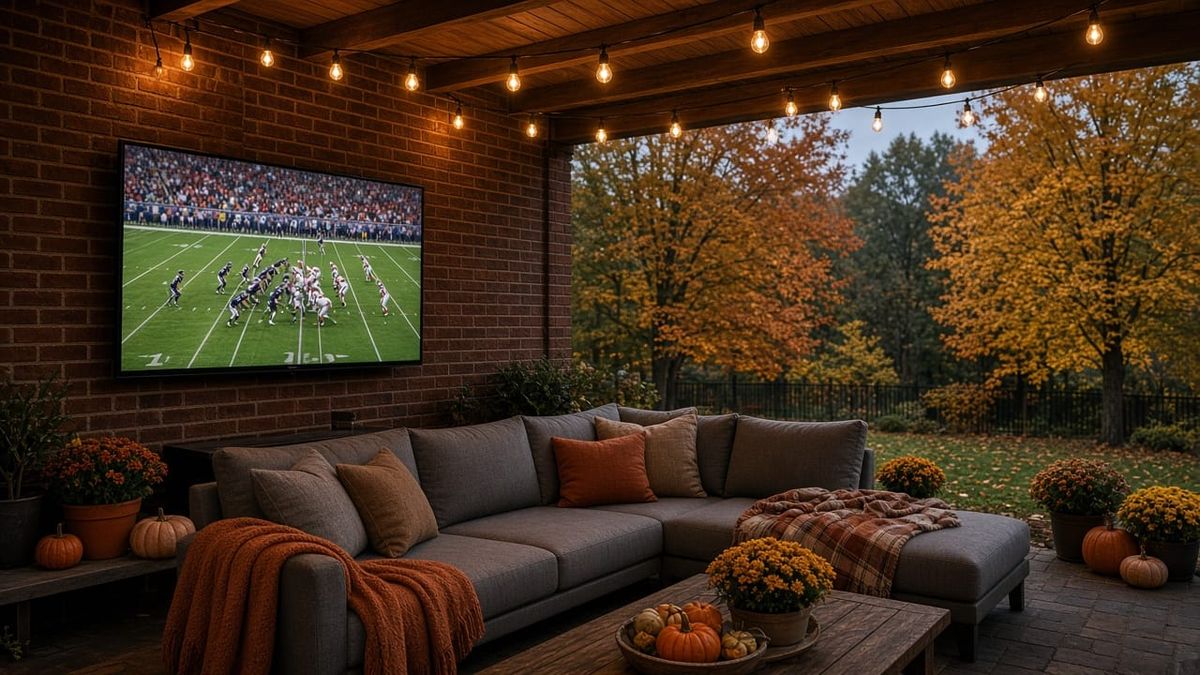
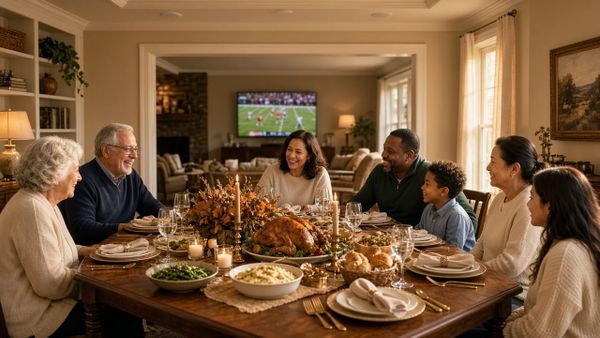
Football season doesn't have to stay in the living room. On a mild fall Saturday or a cool spring evening, a lot of families would rather watch the game from the back porch with the grill going. A TV on the patio makes that easy, but outdoors is a different job than hanging a TV over the couch. Weather, sun, power, and Wi-Fi all need a plan. Here is what to think through for homes in Marietta, Kennesaw, Woodstock, Canton, Roswell, and Alpharetta.
Covered, Screened, or Exposed?
Where the TV goes matters more than anything else.
- Screened porch. The most protected outdoor spot. The roof keeps rain off, and screens cut down on bugs and some blowing debris. Humidity, pollen, and temperature swings still get in, though.
- Covered patio or porch. A deep roof overhang keeps the TV out of direct rain most of the time, but wind-driven rain can still reach the wall, especially near the edge.
- Exposed wall or open deck. Direct sun and rain are the toughest conditions for any screen. If there is no cover, plan on equipment built for full exposure, or consider adding cover first.
As a rule, mount the TV as far back under the roof as the space allows, away from the drip line.
Outdoor-Rated TV or Indoor TV?
Outdoor-rated TVs are built to handle moisture, dust, heat, and cold, and many have brighter screens meant to stay visible in daylight. They cost more, but they are designed for the job.
An indoor TV is not built for humidity, condensation, or bugs getting into the vents, and using one outside may affect its warranty. Some homeowners use an indoor set on a well-protected screened porch and accept the risk. We'll talk through the trade-offs honestly for your space so you can decide with clear eyes.
Mounts and Hardware That Won't Rust
A standard indoor mount can corrode outdoors, and rust streaks on brick or siding are hard to clean. For patios we use weather-resistant mounts with corrosion-resistant finishes and stainless or coated hardware.
A tilting or full-motion mount is often worth it outside. Tilting helps fight glare, and a full-motion arm can swing the screen toward the grill, the table, or the fire pit, then fold back against the wall when the game is over.
Brick, Siding, Posts, and Beams
Outdoor walls vary a lot, and each one is anchored differently:
- Brick. Strong, but it needs masonry anchors set in the right spots, not loose mortar joints.
- Siding. The mount has to reach solid framing behind the siding, and every penetration should be sealed so water doesn't get behind it.
- Posts and beams. Sometimes the best viewing spot isn't a wall at all. A sturdy post or beam can work when it is solid enough for the TV and the mount.
Glare, Sun Angle, and Viewing Height
Before drilling, think about when you'll actually watch. An afternoon game can wash out a screen that faces west, while a wall facing away from the open side of the porch usually stays shaded. We look at where the sun comes in and where the seating will go.
Outdoor seating is often lower and deeper than a sofa, so the TV usually shouldn't go as high as people expect. Avoid mounting it high just because the wall is tall. For more on heights and mount styles, see our guide to TV mount types and height.
Power: GFCI Outlets and In-Use Covers
Outdoor outlets should be GFCI-protected and covered with a weatherproof in-use cover, the bubble-style cover that stays closed while something is plugged in. That keeps rain off the plug while the TV is running.
AlphaLVC is a low-voltage contractor, so we don't install line-voltage wiring. If your patio needs a new outlet near the TV, we'll recommend having a licensed electrician add it, and we can plan the TV location with them so everything lines up.
Clean Cable Routing Outside
Cords dangling down a patio wall look messy and don't hold up to weather. We run HDMI and network cables in conduit or through sealed wall penetrations, with drip loops and sealed entry points so water can't follow the cable inside. The goal is a TV that looks built in, with no visible cords.
Wi-Fi That Reaches the Patio
Streaming apps need a steady connection, and exterior walls, especially brick, can weaken a Wi-Fi signal. If the game buffers on the porch, a wired network drop to the TV or an access point placed to cover the outdoor space can help. We install both, along with the network cabling behind them.
Optional: Outdoor Speakers
TV speakers are small, and outdoors the sound drifts away fast. Weather-rated outdoor speakers can make the game easy to hear without blasting the neighbors, and they can join the rest of your home's audio as their own zone. See how that works in Can You Hear the Game From the Kitchen?
Get Your Patio Ready for Game Day
AlphaLVC mounts TVs indoors and out and installs the cabling, Wi-Fi, and outdoor audio that go with them. We are a local, licensed low-voltage contractor (Georgia license LVU406567) serving homes and businesses in Cobb, Cherokee, and Fulton counties, including Acworth, Alpharetta, Canton, Johns Creek, Kennesaw, Mableton, Marietta, Roswell, Sandy Springs, Smyrna, and Woodstock.
Call or text 470-295-5382 or email info@alphalvc.com. Send a photo of your porch or patio, and we'll help you plan the TV, the wiring, and the sound.