

TL;DR: Professional TV cabling installation requires structured Cat6A or RG6 coaxial runs from a central hub to ensure stable 4K video distribution without signal lag.
- Installation timelines typically range from 1 to 3 hours for single displays or 5 days for networks.
- DIY wiring often fails in commercial spaces unless shielded routing is used to prevent signal interference.
- Recommendation: Use installer-provided hardware for in-wall runs to ensure safety compliance and guaranteed device compatibility.
- The calculation showing that masonry or brick surfaces increase labor costs is detailed in the article. Commercial TV cabling installation requires structured Cat6A or RG6 coaxial cable (coaxial cable) infrastructure to deliver 4K video distributions reliably across office suites and commercial venues. Typical commercial deployments range from simple single-display drops to complex multi-screen distribution networks requiring low-voltage licensing and local code compliance. Professional installation ensures long-term operational performance for your commercial facility in Metro Atlanta.
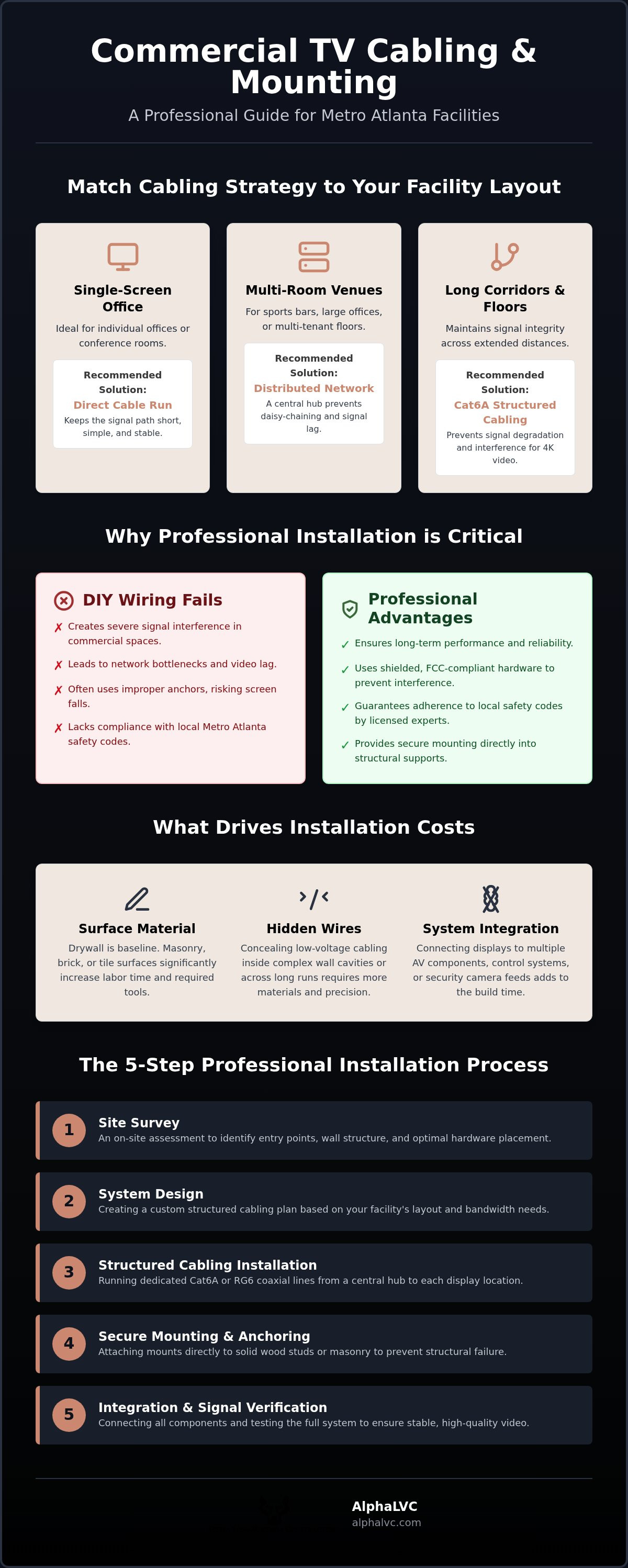
Match commercial display setups to your facility layout
Commercial display setups require customized TV wiring (structured cabling) to deliver clear video signals across your facility. Improper distribution creates severe lag on large display networks, so signal management has to match how the space is actually used.
Typical situations and a concrete starting choice for each:
- Single-screen office drop: use a direct run so the path stays short and simple.
- Sports bar or multi-room corporate floor: plan a distributed network from a central hub rather than daisy-chained HDMI.
- Long corridor or multi-floor span: run high-grade internet cable (Cat6A) so heavy data loads hold up without signal loss.
Your physical layout dictates the ideal setup. For long distances, internet cable prevents signal interference (electromagnetic interference) better than basic hardware. Poor wire management causes early equipment failure, and careful routing protects the investment over time.
Plan routes early. When integrating screens with security cameras, contact Metro Atlanta Alarms, Security Cameras & Access Control for a complete wall check (site survey). Site surveys that focus on non-proprietary hardware help you avoid hidden fees and technical obsolescence.
Tip: Assess your bandwidth needs early; video-over-IP across multiple displays requires dedicated Cat6A runs rather than standard HDMI extenders.
Build stable infrastructure for commercial video distribution
Proper TV wiring requires dedicated runs from a central distribution hub directly to each display location. Solid physical connections keep the signal stable under daily commercial use.
According to the Wikipedia Cable Television Overview from 2026, central headend facilities process signals before distribution across local wire networks. High-quality TV cable or internet cable feeds directly into distribution splitters or network switches.
Bad terminations spread signal interference across the whole network, so solid copper conductors matter for protecting against signal degradation. You can combine your video system with our 2026 Keyless Entry Installation Guide: Metro Atlanta for unified building controls.
Prioritizing open-standard hardware and a professional wall check helps you sidestep unexpected costs and outdated tech, provided you plan for initial structural routing limits during setup. Professional technicians route lines cleanly so the hardware stays reliable.
What drives the cost of TV mounting near you
Overall expenses are largely dictated by the specific dimensions of the display and the composition of your walls. Standard flat panel placement costs less than mounting display units onto brick or tile.
| Installation Factor | Cost Driver Impact |
|---|---|
| Surface Material | Drywall is baseline; masonry increases labor |
| Hidden Wires | Long runs increase material requirements |
| System Integration | Connecting AV components adds build time |
Transparent pricing requires assessing your space directly rather than relying on generic estimates. A site survey still needs an initial in-person evaluation before you receive a finalized quote. Laying internet cable through complex wall cavities drives total labor time. High-power equipment can generate signal interference, requiring shielded lines. Integrating your display alongside Cabling for Security Cameras: 2026 Professional Guide keeps power allocation balanced.
Properly hiding wires (low-voltage cabling) protects internal building infrastructure while keeping connections clean. Request a personalized quote for your TV setup (professional installation) in Metro Atlanta.
Mount a TV above a fireplace without structural risk
Mounting a heavy screen above a hearth requires secure structural anchoring to prevent dangerous wall collapses. During active field work, technicians frequently inspect stress points where high heat weakens standard plastic drywall anchors over time. Heavy displays require direct attachment to solid wooden studs or masonry.
If you worry your heavy display might pull away from the plaster, professional installation (TV setup) builds stability with heavy-duty toggle bolts or lag screws. Safe mounting still depends on a thorough site survey (wall check) so anchors land in real structure, not finish material alone.
For commercial properties in Metro Atlanta, combining screen displays with Expert Access Control Installation for Marietta Businesses secures your physical space. Certified installers anchor mounting brackets correctly the first time and reduce fall hazards for valuable electronics.
Why DIY wiring fails in high-density commercial spaces
Self-installing TV wiring in dense commercial environments creates severe signal interference and network bottlenecks.
Situation: Building layouts in Metro Atlanta often trap high-frequency signals, and self-installed lines routinely cross electrical conduits without proper shielding.
Resulting problem: Video clarity degrades across the system when amateurs run low-grade TV cable right alongside high-voltage lines.
Professional path: Shielded routing, correct separation from power, and a documented wall check restore clean signal distribution and cut the hidden costs that show up after premature equipment failures.
DIY setups also lack physical durability under commercial traffic. Professional installations reduce system downtime because terminations, pathways, and hardware ratings are specified for continuous use. If self-installation looks cheaper on day one, fixing improperly routed lines costs significantly more later.
Choose who supplies the TV mount and cables
You can supply your own hardware, or your installer can provide the mounting brackets and TV cable.
Professional technicians bring high-grade wall mounts, short patch cords, and complete connection kits to every job. In Metro Atlanta, installer-provided hardware supports safety compliance for in-wall applications.
Using personal equipment might save upfront effort, but non-rated cords inside walls create serious fire risks. Installer-supplied hardware functions as a practical safety check for rated in-wall parts and matched connectors. Consumers should review consumer protection resources from the FTC 2024 regarding service disclosure standards.
Supplying your own gear fits budget-conscious owners who already hold compatible equipment. Letting technicians supply hardware fits owners who want guaranteed device compatibility. Ask AlphaLVC for hardware options priced to your layout.
Five steps that keep a commercial TV cabling install on schedule
Planning a TV wiring project requires a clear project schedule to avoid downtime in Metro Atlanta facilities. Structured cable deployments stay on track when teams map every drop in advance.
- Conduct a wall check: Technicians evaluate structural pathways and note hardware limitations that could force later redesigns.
- Design the layout: Engineers map routing for internet cable and TV cable drops.
- Run the infrastructure: Installers pull hardwired lines through ceilings using proper hiding wires techniques.
- Terminate and test: AlphaLVC network specialists attach connectors and test each line to prevent signal interference.
- Final TV setup: Staff mount displays, integrate media sources, and complete system testing.
Complete installations typically require two to five business days depending on property size. Hardwired runs remain the stronger choice when uptime matters.
Verify compliance, licensing, and ongoing service support
You must verify that your installer holds proper state licensing and low-voltage permits before any TV setup begins. Compliance protects your property from safety hazards.
Proper certification separates reliable contractors from risky operators. Licensed technicians run each wire through walls without violating local building codes. Working with certified experts such as AlphaLVC adds clear accountability: active insurance policies, written warranties, and options for ongoing service support in the Metro Atlanta area.
Safe wiring stays out of sight yet carries the load of daily operations, much as a sound foundation carries a building. Qualified teams still provide dedicated assistance long after the initial installation. Demand proof of credentials early; reliable contractors display them without delay, and a licensed specialist supports long-term system performance with continuous service options.
Frequently asked questions
How much does TV mounting near me cost?
Your total cost depends on wall construction, equipment choices, and wire concealment requirements. Mounting a television on drywall requires less labor than securing heavy displays to brick or concrete surfaces. Concealing a TV cable inside an exterior wall involves additional routing labor compared to simple interior hollow-wall runs. Request a personalized quote to get accurate pricing for your specific Metro Atlanta layout.
Do you provide the TV mount and cables?
Yes, complete hardware supplies and commercial connections are available for your TV setup. Technicians supply matching brackets along with low-loss internet cable for reliable network feeds. Using hardwired links prevents signal interference across the network. Specialized hardware is stocked to fit varied display sizes and mounting scenarios.
Can you mount a TV above a fireplace?
Mounting a television over a fireplace is possible with proper heat management and electrical planning. The installation requires an upfront wall check to ensure structural studs and clear pathing exist for power lines. Physical wall layout constraints may still limit line-of-sight mounting height options. Custom TV wiring safely routes high-definition lines away from active heat sources.
How long does TV mounting take?
A typical installation takes between one and three hours to complete. Complex jobs that require hiding wires through solid framing need additional time. Connecting multi-zone audio or configuring a smart home setup (smart home integration) extends the timeline. Clear space around the installation area helps technicians finish efficiently.
Which TV mounting bracket is right for my TV?
Bracket choice depends on your seating layout, viewing angles, and the display weight. Low-profile flat mounts hold screens tight against the wall, while full-motion articulating arms allow multi-angle swivel control. Large, heavy-duty displays require sturdy steel plates anchored directly into wall studs. High-grade steel hardware keeps the equipment stable and secure.
Final Steps for Your Display Setup
Proper TV wiring ensures stable connectivity and clean aesthetics for commercial displays in 2026. The same decisions that open this guide still apply at close: match the topology to your rooms, run rated cable for the distance and density you actually have, and confirm licensing before anyone opens a wall. Hiding wires removes visible clutter while maintaining compliance with safety standards across Metro Atlanta.
The licensed AlphaLVC team delivers low-voltage cabling and commercial display mounting tailored to your venue. A complete wall check is required beforehand to identify structural limitations and keep the design aligned with open, serviceable hardware.
Ready to upgrade your commercial media systems? Contact AlphaLVC.com today to schedule a wall check and request a custom project quote for your facility.


